I am the first to admit that many of the new 'bailout' plans and modifications have created much confusion for me (and I believe my fellow Americans too). Most folks want to know, "what's in it for me?" I don't blame them. If you've been one to pay your mortgage on time, and you owe less than what the house is worth-- don't count on much, if anything to befall you as far as a bailout goes. The mortgage bailout of 2009 is expected to aid one in nine US homeowners. In this posting, I will try to simplify what I have learned from reading up on the latest Obama efforts to prevent further foreclosures from happening. Most of what I learned came from the Wall Street Journal's March 5, 2009 expose on the subject.
First of all, there are two options available to those who qualify.
1) Loan Modification, which is specifically tailored to homeowners who are having trouble making their monthly mortgage payments because their interest rate has gone up, or their income has shrunken
2) Loan Refinancing, which is for borrowers who have been denied refinancing, perhaps due to a drop in their home's value.
Here are the ins and outs of both options. The one you may qualify for depends on your situation.
To qualify for a Loan Modification, this is what you need to prove:
1) Your payment is more than 31% of your pretax monthly income, and you can show it is a hardship for you to make your monthly payment.
2) You occupy a single family home and can prove it's your primary residence.
3) You have an unpaid principal balance of $729,750 (or less).
4) Your mortgage was originated on or before January 1, 2009.
5) You will have to make all modified payments over a trial period of three months or more.
*You will not qualify for loan modification if any of the following apply: the mortgage in question is not on your primary residence, you aren't about to default on the mortgage, your home is vacant or condemned, your unpaid principal balance is more than $729,750, your mortgage is packaged into securities whose rules strictly forbid modification, and/or your loan servicing company cannot be reached, or is unable to consider loan modification.
To qualify for a Loan refinancing, this is what you need to prove:
1) Your mortgage is owned or guaranteed by Fannie Mae or Freddie Mac
2) You are current on your mortgage payment
3) You can prove your ability to afford the new mortgage debt
4) Your mortgage balance can be no more than 105% of the current estimated value of your home.
*You will not qualify for a loan refinancing if your loan is not owned or guaranteed by Fannie or Freddie, you have been more than 30 days late on any payment in the last 12 months, you cannot afford the new mortgage debt, and/or your home's value has fallen to the point that you owe more than 105% of the estimated current market value of the home.
That's it in a nut shell. Hopefully simplified! Click here to link to the Wall Street Journal article, which will provide you with further details of the mortgage bailout plan. Also, check out this link, which comes directly from the U.S. Tresury Department. Details of the Mortgage bailout plan
Please feel free to call me with any questions about this posting, or if you would like more information about buying or selling a home in Tucson, and/or general infromation about Tucson real estate. Have a great weekend!
Written by Sarah Ley,
BSBA, ABR, CRS, CHNSA
Realtor with Long Realty Company
Direct: (520) 404-0544
www.sarahley.longrealty.com
sley@longrealty.com
Saturday, March 7, 2009


Monday, February 2, 2009
Catalina Foothills Real Estate- New Listing in Skyline Bel Air Estates!


The above photos are of the Community Pool, Rec Center, and Tennis courts at popular Skyline Bel Air Estates-- a well established community of approximately 460 homes which was developed in the late 1960's to mid-1970's in the Catalina Foothills North of Tucson. Most homes in the SBA community are on at least one half acre to over an acre lots. Sarah Ley, your Tucson Realtor lives in Skyline Bel Air. Please call her at (520) 404-0544 with any questions about the neighborhood, or if you would like more information about her newest listing in SBA.


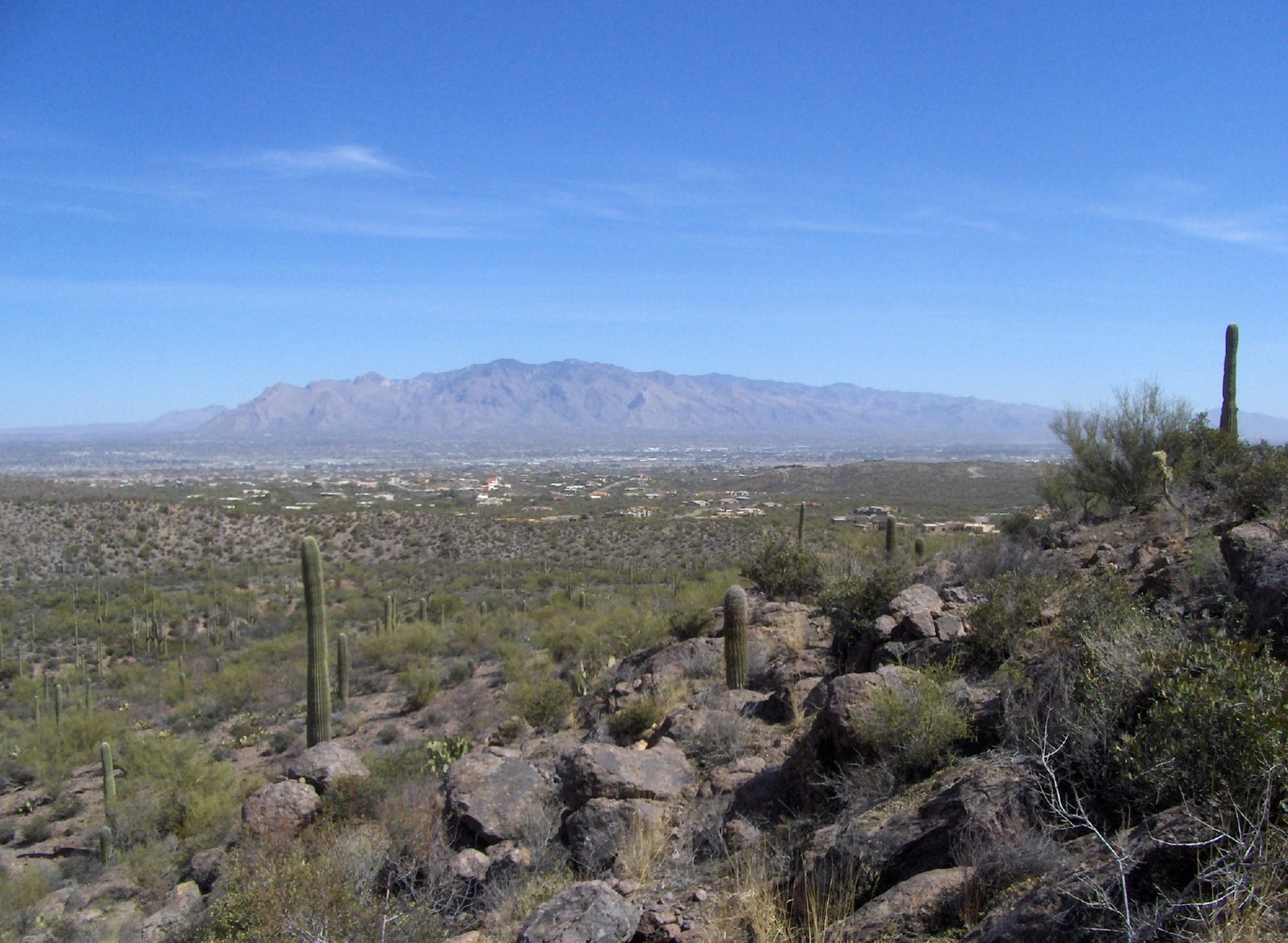
Great Mountain views are captured from the backyard of this Catalina foothills listing in Skyline Bel Air Estates. Your family will love the peaceful desert setting offered in SBA.
It's going to be about 11 days before you can take a look inside my new listing in the Catalina Foothills. Actually, the house I just listed at 5852 N. Placita Bacanora is right next door to my house. If you want to be my neighbor, I am taking auditions (just kidding)! We've lived in the "SBA" (as its known to fellow residents) neighborhood for about six years now. I've been so happy with this community, I can't say enough good things about it. In addition to a great foothills location (Swan to the west, Craycroft to the east, Sunrise to the South, and the southern boundary of Skyline Country Club Estates to the north), the neighborhood community facilities are well used by many families-- especially in the summer, when there is a thriving local swim team (which our family has been involved with for the whole time we've lived here).
About the house, the assessor's records lists that the house was built in 1968. It's being sold, "as is" in an estate sale for $425,000 by the second owner, who purchased it in April of 1972. The owner is now living in an assisted living facility in the foothills. I was told by another neighbor, that the house was most likely custom built by the original owner. It's on a .83 acre lot, and has awesome views of the Catalina's from the backyard. Although it is (in all honesty) very dated, the lot, the Skyline Bel Air community, the Catalina Foothills school district, and the fact that it's slump block construction are the primary selling points. Plus, you get great neighbors at no extra charge!
The elementary school, Sunrise Drive Elementary, is within walking distance from the house. Both of my children have gone to Sunrise. My daughter graduated from the school and is now at Orange Grove Middle school. My son is a 5th grader at Sunrise. We have been very happy with Sunrise Drive Elementary, and the quality of the education our children received has been well above average. In case you are not familiar with it, the Catalina Foothills School District (CFSD), has some of the highest test scores in the state. Additionally, they are known for the smallest class sizes in Tucson (for public schools), a high degree of parent participation, and many diversified extra curricular programs.
If you are thinking about buying or selling a home in the Catalina Foothills, I hope you will stop in at the open houses, which will be coordinated with The Browns are Selling estate sale on Saturday February 14th, and Sunday February 15th, 2009 from 1-4 PM. Please call Sarah if you have any questions about this property, or about Tucson real estate in general.
Written by Sarah Ley,
Written by Sarah Ley,
BSBA, ABR, CRS, CNHSA
Realtor with Long Realty
Direct: (520) 404-0544
Sunday, January 25, 2009
Open House in the Catalina Foothills

Good Morning! Today I'll be hosting an open house in the Catalina Foothills. This is a great property that is priced to sell! If you are thinking about buying or selling a home in the Catalina Foothills, this is a great location near Kolb and Sunrise. To the left is a photo of the house.
The description of this property is as follows: This beautifully updated home sits on a quiet cul-de-sac in the desirable Catalina Foothills. All three bathrooms are spectacular with a jetted tub in the Master bath. The family room features a built in flat screen TV with surround sound speakers. French doors open to a lush, private greenbelt, which is bordered by the back yard from both the Dining and Family rooms. The Master bedroom has it own French doors to its covered deck with dramatic mountain views. This home was recently appraised at $385,000.
This great Catalina Foothills property is indeed priced to sell & offers a great value for discerning buyers looking to get a deal on Tucson real estate! Stop by Sarah Ley's open house from 1-4 PM on Sunday, January 25th, 2009 to see this property. Hope to see you at the open house! You can find this property in the Tucson Realtor's MLS as MLS #20840105. Click on the link above for complete property details and directions.
Written by Sarah Ley,
BSBA, ABR, CRS, CNHSA,
Realtor with Long Realty Company
Realtor with Long Realty Company
Direct: (520) 404-0544
Tuesday, January 20, 2009
Inauguration Day is Here!
Most folks are going to be paying at least some attention to the festivities of Inauguration day. This is sure to be a very exciting and historic day! Here is an internet feed, that if you click on this link-- will enable you to watch history in the making from your computer.
Incidentally, if you are thinking about Tucson real estate today, I am here at my office- actually working! We had our office meeting this morning, and a couple of interesting announcements were made. One is that new construction sales prices in California (our market patterns usually follows theirs after a few quarters), are down. The median sales price for new construction in California has dropped 35% from December 2007 levels to $278,000. Obviously, builders nationwide have taken a huge hit with the declining economy, and home starts are way down from a year ago. The fact that new construction home prices have dramatically declined is a signal of waning demand from buyers. The construction industry is counting on Obama to help them change the rising tide of losses that is weighing down the entire industry.
Home buyers in general are now very skeptical about making a mistake. They do not want to buy a home in a down market, and then have the value decline even more. Ideally, this may be the best time to buy, as there is one thing for certain-- you cannot ever time the bottom of the market! If you are planning to live in the home, and plan to be there for at least five years, you can usually ride out any bumps in the market. If you're thinking of buying new home construction in Tucson, builders are offering many incentives to gain your business. In addition to reduced prices, you may get free upgrades, free lot premiums, and possibly even financing incentives. There are currently so many options out there for Tucson home buyers, this is (in my professional opinion), a great time to buy a home in Tucson!
Additionally, if you are thinking of buying or selling investment property in Tucson, this may be the year to do it. I have some great information about buying investment property in Tucson on my website. Because prices have dropped, and are now on average at or below 2004 levels, and also interest rates have declined-- you can now buy investment real estate in Tucson with a positive cash flow. There are many bank owned properties that are being sold at great discounts from what they sold for at the peak of the market. If you are thinking of buying or selling bank owned (REO) real estate, or are interested in finding more out about short sales, please do not hesitate to contact me. I do have an investor client who is now buying his third bank owned property. Granted, many of these houses need work. But if you are willing to put in a little sweat equity, it can pay great dividends in the long run.
Enjoy Inauguration Day! Please feel free to call me with any questions you may have about Tucson real estate in 2009.
Written by Sarah Ley,
BSBA, ABR, CRS, CNHSA
REALTOR with Long Realty Company
Direct: (520) 404-0544
http://www.sarahley.longrealty.com/
sley@longrealty.com
Incidentally, if you are thinking about Tucson real estate today, I am here at my office- actually working! We had our office meeting this morning, and a couple of interesting announcements were made. One is that new construction sales prices in California (our market patterns usually follows theirs after a few quarters), are down. The median sales price for new construction in California has dropped 35% from December 2007 levels to $278,000. Obviously, builders nationwide have taken a huge hit with the declining economy, and home starts are way down from a year ago. The fact that new construction home prices have dramatically declined is a signal of waning demand from buyers. The construction industry is counting on Obama to help them change the rising tide of losses that is weighing down the entire industry.
Home buyers in general are now very skeptical about making a mistake. They do not want to buy a home in a down market, and then have the value decline even more. Ideally, this may be the best time to buy, as there is one thing for certain-- you cannot ever time the bottom of the market! If you are planning to live in the home, and plan to be there for at least five years, you can usually ride out any bumps in the market. If you're thinking of buying new home construction in Tucson, builders are offering many incentives to gain your business. In addition to reduced prices, you may get free upgrades, free lot premiums, and possibly even financing incentives. There are currently so many options out there for Tucson home buyers, this is (in my professional opinion), a great time to buy a home in Tucson!
Additionally, if you are thinking of buying or selling investment property in Tucson, this may be the year to do it. I have some great information about buying investment property in Tucson on my website. Because prices have dropped, and are now on average at or below 2004 levels, and also interest rates have declined-- you can now buy investment real estate in Tucson with a positive cash flow. There are many bank owned properties that are being sold at great discounts from what they sold for at the peak of the market. If you are thinking of buying or selling bank owned (REO) real estate, or are interested in finding more out about short sales, please do not hesitate to contact me. I do have an investor client who is now buying his third bank owned property. Granted, many of these houses need work. But if you are willing to put in a little sweat equity, it can pay great dividends in the long run.
Enjoy Inauguration Day! Please feel free to call me with any questions you may have about Tucson real estate in 2009.
Written by Sarah Ley,
BSBA, ABR, CRS, CNHSA
REALTOR with Long Realty Company
Direct: (520) 404-0544
http://www.sarahley.longrealty.com/
sley@longrealty.com
Monday, January 19, 2009
Ready, Set-- Obama!
I notice a refreshing enthusiasm in the crisp Tucson morning air today. January has always been the start of a new year, and the motto, "Out with the old, in with the new," has been the mindset (at least for the first couple weeks of the year), until new year's resolutions vaporize like money invested in the stock market did in 2008.
But this January is markedly different. The excitement is palpable. As he said so eloquently in November, "Even if you didn't vote for me, I am still your president." Tomorrow is an important day, as is today, Martin Luther King Jr. day, for all Americans-- no matter the color of their skin. Being an American is about freedom, and idealism, and always believing that we have what it takes to pave the way for our children to have a better tomorrow. Qualities that I believe our new president will bring back to us in dramatic ways. It will be emotional, as is any big change. I am hopeful that Obama will rally Americans to find new hopes and ideals in themselves. He will indeed be a president of change, a desperately needed positive force for this ailing nation.
Housing is at the forefront of critical issues that Obama will need to confront head-on in the early days of his presidency. It is believed that Obama's policies (even though we don't fully know what they are just yet), will have a positive affect on the housing market. If anything, what people need right now is hope. Hope is what we've lost with all of the retirement accounts that vaporized in 2008, with all of the jobs that were lost, with all of the people who lost their homes. Simply stated, the American people need someone who will breathe new hope back into this nation, and I think the right man is in the driver's seat.
It's all about perception... Perception is reality. If that is true, consider this. The housing boom of the last few years was brought about by a huge availability of credit. It was fueled by credit, and now it is frozen by the same demon that fueled it. The lack of available credit, and the fact that more and more Americans have lost fortunes and jobs, is causing a 'withdrawal affect,' which means that people are doing things that pull money out of the economy, instead of putting money into the economy- which is what is needed to revive it. I remember learning about this phenomena in Economics 101 at the University of Arizona. My professor said that when people stop spending money, jobs are lost (unemployment goes up), stores and restaurants go out of business (demand for goods and services declines), and credit dries up (banks have less money to lend). If it gets bad enough-- which is debatable that it may be 'bad enough' right now, a deep recession is going to be the result. This link is a very interesting power point presentation that details what caused the recession, and what we need to do to end it.
It's funny how perception works though. If people perceive that things are better-- or that they are getting better, then they will change their patterns. They will go out to dinner again. They will buy that lottery ticket. They will take that weekend trip to the White Mountains. They will go to the Wildcats game. This is what we need right now (the restoration of consumer confidence). Once consumer confidence is restored, the economy as a whole will begin to recover. We desperately need to ensure the general public that the economy will be restored, so their confidence is restored.
Being that Tucson has taken a hard hit with foreclosures, business closures, and job losses, I have auspicious aspirations that 2009 will have good things in store for us. But then, I am an optimist. I'm glad that our new leader is too. If you have any questions about buying a home in Tucson, or possibly selling your Tucson home in a down market, please give me a call. I am a qualified and professional Tucson Realtor who has been successfully assisting clients in the Tucson real estate market since 1999. As Obama says, "Yes we can!"
Written by Sarah Ley,
BSBA, ABR, CRS, CNHSA
Realtor with Long Realty Company
Direct: (520) 404-0544
http://www.sarahley.longrealty.com/
sley@longrealty.com
But this January is markedly different. The excitement is palpable. As he said so eloquently in November, "Even if you didn't vote for me, I am still your president." Tomorrow is an important day, as is today, Martin Luther King Jr. day, for all Americans-- no matter the color of their skin. Being an American is about freedom, and idealism, and always believing that we have what it takes to pave the way for our children to have a better tomorrow. Qualities that I believe our new president will bring back to us in dramatic ways. It will be emotional, as is any big change. I am hopeful that Obama will rally Americans to find new hopes and ideals in themselves. He will indeed be a president of change, a desperately needed positive force for this ailing nation.
Housing is at the forefront of critical issues that Obama will need to confront head-on in the early days of his presidency. It is believed that Obama's policies (even though we don't fully know what they are just yet), will have a positive affect on the housing market. If anything, what people need right now is hope. Hope is what we've lost with all of the retirement accounts that vaporized in 2008, with all of the jobs that were lost, with all of the people who lost their homes. Simply stated, the American people need someone who will breathe new hope back into this nation, and I think the right man is in the driver's seat.
It's all about perception... Perception is reality. If that is true, consider this. The housing boom of the last few years was brought about by a huge availability of credit. It was fueled by credit, and now it is frozen by the same demon that fueled it. The lack of available credit, and the fact that more and more Americans have lost fortunes and jobs, is causing a 'withdrawal affect,' which means that people are doing things that pull money out of the economy, instead of putting money into the economy- which is what is needed to revive it. I remember learning about this phenomena in Economics 101 at the University of Arizona. My professor said that when people stop spending money, jobs are lost (unemployment goes up), stores and restaurants go out of business (demand for goods and services declines), and credit dries up (banks have less money to lend). If it gets bad enough-- which is debatable that it may be 'bad enough' right now, a deep recession is going to be the result. This link is a very interesting power point presentation that details what caused the recession, and what we need to do to end it.
It's funny how perception works though. If people perceive that things are better-- or that they are getting better, then they will change their patterns. They will go out to dinner again. They will buy that lottery ticket. They will take that weekend trip to the White Mountains. They will go to the Wildcats game. This is what we need right now (the restoration of consumer confidence). Once consumer confidence is restored, the economy as a whole will begin to recover. We desperately need to ensure the general public that the economy will be restored, so their confidence is restored.
Being that Tucson has taken a hard hit with foreclosures, business closures, and job losses, I have auspicious aspirations that 2009 will have good things in store for us. But then, I am an optimist. I'm glad that our new leader is too. If you have any questions about buying a home in Tucson, or possibly selling your Tucson home in a down market, please give me a call. I am a qualified and professional Tucson Realtor who has been successfully assisting clients in the Tucson real estate market since 1999. As Obama says, "Yes we can!"
Written by Sarah Ley,
BSBA, ABR, CRS, CNHSA
Realtor with Long Realty Company
Direct: (520) 404-0544
http://www.sarahley.longrealty.com/
sley@longrealty.com
Sunday, January 18, 2009
The Tucson Real Estate Market Report
I just posted quite a long blog article yesterday, titled "The State of Tucson Real Estate in January 2009." This blog included many newsworthy updates from NAR (The National Association of Realtors), as well as some news from Fannie Mae and Freddie Mac about letting renters of foreclosed homes stay on after the owner is foreclosed on.
At any rate, I started thinking that readers would like to access the Long Realty Tucson area housing report, as this report contains a great deal of factual information about what the local market is doing. If you click on this link, you can directly access the housing report for January 2009 for the Tucson real estate market. Basically, inventory is down, and sales are up. We can attribute this to a few different factors, the main one being that buyer demand is picking up. The fact that interest rates and prices have both come down significantly (interest rates are at 30 year lows, and prices are at or below 2004- prior to the boom levels), is helping to fuel buyer demand.
Existing hom sales are up for this reason. This has already happened in California (and they boomed before we did in Tucson). When I was visiting San Diego last August, I read an article in the San Diego paper that stated 40% of all sales in the summer of 2008 in San Diego were foreclosures. I thought that was a ridiculously high level, and I never thought that we'd see that many foreclosures here in Tucson. However, in November 2008, approximately 32% of all the sales were foreclosed properties. This shows that investors are taking advantage of some value in the market. Indeed, there is value out there. I predict that we may even start seeing some investors flipping homes in then coming months, as many first time home buyers do not have the cash to fix up a home that's been trashed by a foreclosed owner. They would rather purchase something that is move in ready, and as long as they can afford the monthly payment and also come up with the down payment (which is 3.5% for FHA buyers), they would be ecstatic to get a move-in ready home.
All of this is great news for Tucson home buyers. If you are in the market for a home, or are thinking that now is a good time to buy-- you are right! If you're buying a home for your primary residence, you may wish to avoid short sales, as they can take several months to close, and I have heard horror stories of the banks pulling the plug on the deal at the last minute. However, if you're not going to live in the home (and are buying it as an investment), a short sale may be well worth your while to look into. Bank owned properties can be great deals, but the majority of them need a lot of work, and it's like the quote from "Forrest Gump," "Life is like a box of chocolates, you never know what you're going to get." It is sort of like peeling an onion when you purchase a bank owned property, as there is no telling what the foreclosed owner may have done to the house out of anger of losing their home. This is not always the case though. I sold a bank owned home in November that was built in 2006, and it was just like new. There was absolutely nothing wrong with it, and my buyer got a fabulous deal. The buyer actually got into the home for only $4,000, with an FHA loan, as the bank seller (Freddie Mac) had a special deal where they pay all of the buyer's closing costs.
At any rate, if you are thinking of buying or selling a home in Tucson, please don't hesitate to give me a call. I can honestly say in my 10 years of selling real estate in Tucson, I never thought we'd see a market like this-- but it is a great time to buy!
Written by Sarah Ley,
BSBA, ABR, CRS, CNHSA,
Realtor with Long Realty Company
Direct: (520) 404-0544
http://www.sarahley.longrealty.com/
sley@longrealty.com
At any rate, I started thinking that readers would like to access the Long Realty Tucson area housing report, as this report contains a great deal of factual information about what the local market is doing. If you click on this link, you can directly access the housing report for January 2009 for the Tucson real estate market. Basically, inventory is down, and sales are up. We can attribute this to a few different factors, the main one being that buyer demand is picking up. The fact that interest rates and prices have both come down significantly (interest rates are at 30 year lows, and prices are at or below 2004- prior to the boom levels), is helping to fuel buyer demand.
Existing hom sales are up for this reason. This has already happened in California (and they boomed before we did in Tucson). When I was visiting San Diego last August, I read an article in the San Diego paper that stated 40% of all sales in the summer of 2008 in San Diego were foreclosures. I thought that was a ridiculously high level, and I never thought that we'd see that many foreclosures here in Tucson. However, in November 2008, approximately 32% of all the sales were foreclosed properties. This shows that investors are taking advantage of some value in the market. Indeed, there is value out there. I predict that we may even start seeing some investors flipping homes in then coming months, as many first time home buyers do not have the cash to fix up a home that's been trashed by a foreclosed owner. They would rather purchase something that is move in ready, and as long as they can afford the monthly payment and also come up with the down payment (which is 3.5% for FHA buyers), they would be ecstatic to get a move-in ready home.
All of this is great news for Tucson home buyers. If you are in the market for a home, or are thinking that now is a good time to buy-- you are right! If you're buying a home for your primary residence, you may wish to avoid short sales, as they can take several months to close, and I have heard horror stories of the banks pulling the plug on the deal at the last minute. However, if you're not going to live in the home (and are buying it as an investment), a short sale may be well worth your while to look into. Bank owned properties can be great deals, but the majority of them need a lot of work, and it's like the quote from "Forrest Gump," "Life is like a box of chocolates, you never know what you're going to get." It is sort of like peeling an onion when you purchase a bank owned property, as there is no telling what the foreclosed owner may have done to the house out of anger of losing their home. This is not always the case though. I sold a bank owned home in November that was built in 2006, and it was just like new. There was absolutely nothing wrong with it, and my buyer got a fabulous deal. The buyer actually got into the home for only $4,000, with an FHA loan, as the bank seller (Freddie Mac) had a special deal where they pay all of the buyer's closing costs.
At any rate, if you are thinking of buying or selling a home in Tucson, please don't hesitate to give me a call. I can honestly say in my 10 years of selling real estate in Tucson, I never thought we'd see a market like this-- but it is a great time to buy!
Written by Sarah Ley,
BSBA, ABR, CRS, CNHSA,
Realtor with Long Realty Company
Direct: (520) 404-0544
http://www.sarahley.longrealty.com/
sley@longrealty.com
Saturday, January 17, 2009
The State of Tucson Real Estate in January 2009
It was announced in the Arizona Daily Star this week that Arizona is one of four states (others are California, Nevada, and Florida) with the biggest percentage of foreclosures. The foreclosure rate last year in Arizona was double the level in 2006, and is reaching epidemic proportions. Each day as more Tucsonans fall into a possible foreclosure situation, I thought it would be beneficial to look at some steps that people can take to try to stay in their homes.
It is important that the Tucson homeowner face the issue head on, and prepare for days and weeks of making phone calls, and working tenaciously to correspond with companies and people who may be able to help you save your home from the painful personal and financial affects of foreclosure. Don’t automatically assume it is too late to act. As long as you are still residing in your home, you probably have a decent opportunity to be able to keep your home. People facing foreclosure have more avenues to pursue than they might initally realize. There are definitely more options than the 'pay what you owe or lose the home' notices that many people believe is their only choice.
A few potential solutions for Tucson homeowners in trouble include:
1) Negotiating a modification of the loan. You can work directly with your lender to attempt to get the terms and interest rate of loan renegotiated, to have a payment that is doable for you.
2) Refinancing the loan. This may be tricky- especially if your credit has been tarnished in the process. However, there are debt reorganization companies that can help work with you to accomplish this.
3) Listing your home with a Realtor for a possible “short sale.” Make sure that your Realtor is skilled in the short sale process, and can work with your lender to try and negotiate a price that will be acceptable to them.
4) Filing for bankruptcy. You will need to retain the services of a qualified attorney to do this, and it will cost you some money. Then you will most likely end up walking away from your debt obligations. I had a client who did this a few years ago, but was still unable to avoid the foreclosure.
A Short sale may be one of your best options to avoid foreclosure and save your credit from the dire affects a foreclosure can have on one's credit score. A short sale is a sale in which the lender agrees to take less than what is owed on the home. This is done by the lender agreeing to write off a portion of their loss. The benefit to the lender is that they can avoid the possible costly expense of a foreclosure. Short sales are typically negotiated by Realtors who are skilled in this area. This will help take pressure off the homeowner, so that they can possibly stay in the home longer. Many professional Tucson Realtors are adept at working short sales. Additionally, there are many buyers who are looking specifically for bargain priced homes. As a caveat, the the process of a short sale can be slow and frustrating, and they have been known to take up to nine months to close. For this reason, many of them end up falling out of escrow, and only about 30% of the short sales negotiated with a buyer actually end up closing.
The problem is that most banks are not moving fast enough to agree to the terms of a short sale. They are sitting on decent offers- thinking that the house could possibly fetch more money. In many cases, given market conditions- this is at best wishful thinking. The banks are not considering that foreclosure will cost them a great deal more in lost time and money in the long run. Although short sales are difficult to navigate, they can be done. They may be one of the best possibilities to currently help troubled homeowners avoid foreclosure.
This just in from Washington- "The National Association of Realtors (NAR) is working hard to ensure that the new Obama administration and Congress will have a "Troubled Asset Relief Program" initiative (TARP) or an additional economic stimulus package. This initiative will include provisions to stimulate home sales, prevent further foreclosures, and restore confidence in the housing market. NAR will continue its push in this direction for a comprehensive housing strategy. “The housing sector is at the core of the current economic crisis,” NAR President Charles McMillan said. “A renewed, revitalized and robust housing market is essential to generating commerce and helping families build wealth and stability. We are eager to see this happen and look forward to working with the Obama administration and Congress to quickly implement housing stimulus efforts.”
NAR is also working to ensure that any stimulus legislation reinstates the higher 2008 mortgage loan limits for FHA, Fannie Mae and Freddie Mac. These actions will have a significant impact on the housing market and will help protect home values,” McMillan said. NAR’s Housing Stimulus Plan includes both legislative and regulatory fixes. Its focus includes keeping mortgage interest rates low, boosting buyer confidence, and reducing the current foreclosure rate. It also asks that regulators be encouraged to help financial institutions resolve problems in the short sale process, make it easier for servicers to modify existing loans, remove unreasonable underwriting guidelines, and insist that credit reporting agencies correct errors promptly. “We must all work together to stimulate and unclog the housing and financial system. Low interest rates, tax credits and higher loan limits will be effective only if people can get a loan."
Some more good news just in- Fannie Mae won't evict renters. Tenants of foreclosed homes can stay if the house is up to code. Fannie Mae recently stated that it would allow qualified renters to sign month-to-month leases and stay on in homes it forecloses on (while it markets the home for sale), without requiring the tenant to pay a security deposit, or pass a credit check or payment history. The new National REO Rental Policy is intended to limit the disruption to the lives of renters when their landlord is foreclosed on, and "bring a measure of stability to communities impacted by high foreclosure rates," said Fannie Mae Chief Operating Officer Michael Williams in a statement.
Freddie Mac is reportedly developing a similar policy. Fannie Mae's program applies only to renters, not the owner of the property or their immediate family, and it requires that homes meet state laws and local code requirements for a rental property. All types of single family properties are eligible for the program, including 2-4 unit properties, condos, co-ops, single family detached homes, and manufactured homes. Properties with loans insured by FHA will require approval from the Department of Housing and Urban Development (HUD). Rents will be set at market rates by reviewing comparable rents, or using "other relevant indicators," Fannie Mae said. Properties will be managed through a real estate broker or a property management company, which will coordinate any necessary property repairs and respond to possible property safety issues. After a foreclosure is complete, renters will be offered a "Cash for Keys" incentive payment to vacate the property, or have the option of signing a new month-to-month lease with Fannie Mae. In late November, Fannie Mae and Freddie Mac suspended the process of evicting about 16,000 troubled borrowers or selling their homes while they implemented a streamlined loan modification program intended to prevent foreclosures.
All of this is good news for Tucson homeowners, because fewer foreclosures in Tucson real estate will hopefully translate to a prevention of further erosion of home prices. Please feel free to call me directly if you have any questions buying or selling a home in Tucson, or about the Tucson real estate market in general.
Written by Sarah Ley,
BSBA, ABR, CRS, CNHSA
Realtor with Long Realty Company
Direct: (520) 404-0544
http://www.sarahley.longrealty.com/
sley@longrealty.com
It is important that the Tucson homeowner face the issue head on, and prepare for days and weeks of making phone calls, and working tenaciously to correspond with companies and people who may be able to help you save your home from the painful personal and financial affects of foreclosure. Don’t automatically assume it is too late to act. As long as you are still residing in your home, you probably have a decent opportunity to be able to keep your home. People facing foreclosure have more avenues to pursue than they might initally realize. There are definitely more options than the 'pay what you owe or lose the home' notices that many people believe is their only choice.
A few potential solutions for Tucson homeowners in trouble include:
1) Negotiating a modification of the loan. You can work directly with your lender to attempt to get the terms and interest rate of loan renegotiated, to have a payment that is doable for you.
2) Refinancing the loan. This may be tricky- especially if your credit has been tarnished in the process. However, there are debt reorganization companies that can help work with you to accomplish this.
3) Listing your home with a Realtor for a possible “short sale.” Make sure that your Realtor is skilled in the short sale process, and can work with your lender to try and negotiate a price that will be acceptable to them.
4) Filing for bankruptcy. You will need to retain the services of a qualified attorney to do this, and it will cost you some money. Then you will most likely end up walking away from your debt obligations. I had a client who did this a few years ago, but was still unable to avoid the foreclosure.
A Short sale may be one of your best options to avoid foreclosure and save your credit from the dire affects a foreclosure can have on one's credit score. A short sale is a sale in which the lender agrees to take less than what is owed on the home. This is done by the lender agreeing to write off a portion of their loss. The benefit to the lender is that they can avoid the possible costly expense of a foreclosure. Short sales are typically negotiated by Realtors who are skilled in this area. This will help take pressure off the homeowner, so that they can possibly stay in the home longer. Many professional Tucson Realtors are adept at working short sales. Additionally, there are many buyers who are looking specifically for bargain priced homes. As a caveat, the the process of a short sale can be slow and frustrating, and they have been known to take up to nine months to close. For this reason, many of them end up falling out of escrow, and only about 30% of the short sales negotiated with a buyer actually end up closing.
The problem is that most banks are not moving fast enough to agree to the terms of a short sale. They are sitting on decent offers- thinking that the house could possibly fetch more money. In many cases, given market conditions- this is at best wishful thinking. The banks are not considering that foreclosure will cost them a great deal more in lost time and money in the long run. Although short sales are difficult to navigate, they can be done. They may be one of the best possibilities to currently help troubled homeowners avoid foreclosure.
This just in from Washington- "The National Association of Realtors (NAR) is working hard to ensure that the new Obama administration and Congress will have a "Troubled Asset Relief Program" initiative (TARP) or an additional economic stimulus package. This initiative will include provisions to stimulate home sales, prevent further foreclosures, and restore confidence in the housing market. NAR will continue its push in this direction for a comprehensive housing strategy. “The housing sector is at the core of the current economic crisis,” NAR President Charles McMillan said. “A renewed, revitalized and robust housing market is essential to generating commerce and helping families build wealth and stability. We are eager to see this happen and look forward to working with the Obama administration and Congress to quickly implement housing stimulus efforts.”
NAR is also working to ensure that any stimulus legislation reinstates the higher 2008 mortgage loan limits for FHA, Fannie Mae and Freddie Mac. These actions will have a significant impact on the housing market and will help protect home values,” McMillan said. NAR’s Housing Stimulus Plan includes both legislative and regulatory fixes. Its focus includes keeping mortgage interest rates low, boosting buyer confidence, and reducing the current foreclosure rate. It also asks that regulators be encouraged to help financial institutions resolve problems in the short sale process, make it easier for servicers to modify existing loans, remove unreasonable underwriting guidelines, and insist that credit reporting agencies correct errors promptly. “We must all work together to stimulate and unclog the housing and financial system. Low interest rates, tax credits and higher loan limits will be effective only if people can get a loan."
Some more good news just in- Fannie Mae won't evict renters. Tenants of foreclosed homes can stay if the house is up to code. Fannie Mae recently stated that it would allow qualified renters to sign month-to-month leases and stay on in homes it forecloses on (while it markets the home for sale), without requiring the tenant to pay a security deposit, or pass a credit check or payment history. The new National REO Rental Policy is intended to limit the disruption to the lives of renters when their landlord is foreclosed on, and "bring a measure of stability to communities impacted by high foreclosure rates," said Fannie Mae Chief Operating Officer Michael Williams in a statement.
Freddie Mac is reportedly developing a similar policy. Fannie Mae's program applies only to renters, not the owner of the property or their immediate family, and it requires that homes meet state laws and local code requirements for a rental property. All types of single family properties are eligible for the program, including 2-4 unit properties, condos, co-ops, single family detached homes, and manufactured homes. Properties with loans insured by FHA will require approval from the Department of Housing and Urban Development (HUD). Rents will be set at market rates by reviewing comparable rents, or using "other relevant indicators," Fannie Mae said. Properties will be managed through a real estate broker or a property management company, which will coordinate any necessary property repairs and respond to possible property safety issues. After a foreclosure is complete, renters will be offered a "Cash for Keys" incentive payment to vacate the property, or have the option of signing a new month-to-month lease with Fannie Mae. In late November, Fannie Mae and Freddie Mac suspended the process of evicting about 16,000 troubled borrowers or selling their homes while they implemented a streamlined loan modification program intended to prevent foreclosures.
All of this is good news for Tucson homeowners, because fewer foreclosures in Tucson real estate will hopefully translate to a prevention of further erosion of home prices. Please feel free to call me directly if you have any questions buying or selling a home in Tucson, or about the Tucson real estate market in general.
Written by Sarah Ley,
BSBA, ABR, CRS, CNHSA
Realtor with Long Realty Company
Direct: (520) 404-0544
http://www.sarahley.longrealty.com/
sley@longrealty.com
Saturday, January 3, 2009
Real Estate Lessons learned the hard way
First of all, Happy New Year! Now that the holidays are over, I am happy to resume writing again, and I was just waiting for the right inspiration to find something to blog about.
I just read one of the best, most informative, well written articles about the housing bust that has led to the subsequent credit market meltdown of 2008. As we must acknowledge in a new year-- out with the old, and in with the new. Still, I believe there's quite a bit to learn from the mistakes that were made that caused the housing and financial markets to crumble. The article from the Wall Street Journal, entitled, "Small House, Big Loan, Spells Owner Trouble" by Michael M. Phillips brilliantly details the multiplying domino effect of the "house of cards" that was created when easy credit allowed strapped homeowners (and home buyers for that matter) to overextend themselves to their breaking points. The story happens to take place (of all places) on the Hopi Reservation in Avondale, Arizona.
Here's a well know recipe for failure:
-Take one woman's financial struggle, and necessity to fuel spending by using her home as a piggy bank
-add a greedy mortgage originator who makes money only by generating new loans,
-throw in a bank that funds the loan then packages it and sells it off to foreign investors as "high quality secure" mortgage backed securities,
-mix in a ratings agency that uses SEC guidelines to rate the securities as AAA so investors are willing to take a higher risk for what they perceive to be a quality investment vehicle
-above all, bake in an oven with little to no government regulation and a ticking time bomb adjustable rate mortgage that will surely throw the "unsuspecting" homeowner completely off the financial Richter scale once baked
-remove in 6-9 months, and watch the homeowner become homeless and the investors' money evaporate!
You'll have to read the article to know how it played out, but I do feel that this article shows how greed and corruption caused the demise of our deregulated financial system to literally fall like a house of cards. Blame whomever you want (one editorial actually had the audacity to blame television itself, namely HGTV for the housing bust). But the result is the same- we have only ourselves to blame. Accountability, now that's a novel word for a new year! Hopefully we will learn from our mistakes and 2009 will be a recovery year for the real estate market.
Happy New Year to you. Please call me directly if you have any questions about the Tucson real estate market, Tucson home sales, or Tucson real estate in general.
Written by Sarah Ley,
BSBA, ABR, CRS, CHNSA
Realtor with Long Realty Company
www.sarahley.longrealty.com
sley@longrealty.com
(520) 404-0544
I just read one of the best, most informative, well written articles about the housing bust that has led to the subsequent credit market meltdown of 2008. As we must acknowledge in a new year-- out with the old, and in with the new. Still, I believe there's quite a bit to learn from the mistakes that were made that caused the housing and financial markets to crumble. The article from the Wall Street Journal, entitled, "Small House, Big Loan, Spells Owner Trouble" by Michael M. Phillips brilliantly details the multiplying domino effect of the "house of cards" that was created when easy credit allowed strapped homeowners (and home buyers for that matter) to overextend themselves to their breaking points. The story happens to take place (of all places) on the Hopi Reservation in Avondale, Arizona.
Here's a well know recipe for failure:
-Take one woman's financial struggle, and necessity to fuel spending by using her home as a piggy bank
-add a greedy mortgage originator who makes money only by generating new loans,
-throw in a bank that funds the loan then packages it and sells it off to foreign investors as "high quality secure" mortgage backed securities,
-mix in a ratings agency that uses SEC guidelines to rate the securities as AAA so investors are willing to take a higher risk for what they perceive to be a quality investment vehicle
-above all, bake in an oven with little to no government regulation and a ticking time bomb adjustable rate mortgage that will surely throw the "unsuspecting" homeowner completely off the financial Richter scale once baked
-remove in 6-9 months, and watch the homeowner become homeless and the investors' money evaporate!
You'll have to read the article to know how it played out, but I do feel that this article shows how greed and corruption caused the demise of our deregulated financial system to literally fall like a house of cards. Blame whomever you want (one editorial actually had the audacity to blame television itself, namely HGTV for the housing bust). But the result is the same- we have only ourselves to blame. Accountability, now that's a novel word for a new year! Hopefully we will learn from our mistakes and 2009 will be a recovery year for the real estate market.
Happy New Year to you. Please call me directly if you have any questions about the Tucson real estate market, Tucson home sales, or Tucson real estate in general.
Written by Sarah Ley,
BSBA, ABR, CRS, CHNSA
Realtor with Long Realty Company
www.sarahley.longrealty.com
sley@longrealty.com
(520) 404-0544
Sunday, December 14, 2008
Mortgage Market Update
While the mortgage market continues to generate a lot of talk, both in the Tucson media and in Washington, interest rates for owner occupied financing are currently near all-time lows. If you are looking to take advantage of these low interest rates, and lower home prices, now is a great time to buy a home or refinance your current mortgage. If you do not have a home to sell first, you are in a great position to buy, as there is a large inventory of quality homes for sale in the Tucson market. Many sellers are willing to make concessions, and depending on terms, you could even have some or all of your closing costs paid by the seller. If you are a first time home buyer, or someone who doesn't have a lot of money for a down payment, FHA financing is an excellent alternative. On January 1, 2009, the down payment will go up from 3% to 3.5% (which you do have to have all of this money and it cannot be borrowed). However, you can still get the seller to pay your closing costs, and can get into a new home with an interest rate in the low 5% for very little down. I recently had a client get into a two year old "bank- owned" home in like new condition for only $4,000 with an FHA mortgage.
Lately there has been talk in Washington about an incentive to home buyers of a 4.5% 30-year fixed rate mortgage. But will it become a reality? Right now, no one really knows, as it is just currently "the talk" of Washington politicians. Homeowners who could benefit from a lower interest rate need to know that even if 4.5% becomes a reality from Washington's actions, it would only be available to home buyers, not homeowners seeking to refinance at a better rate. So if you are considering refinancing your mortgage, now may be a great time to do that, as it is not clear if rates will stay low or trend upwards in the new year.
You also may have heard about a program called "Hope for Homeowners." This program has been approved by legislators to help distressed homeowners, so that they can hopefully avoid foreclosure, and also offer a tax credit of $7,500 to first time home buyers and those who have not owned a home in the past three years. Regardless of its best intentions, the program has not been embraced by investors, and it is not available to many people it could potentially help. The bottom line of "Hope for Homeowners" is that the Fed announced recently that they are going to buy up to $600 billion in mortgage-backed securities. This announcement has already helped to drive rates to historical lows. In January, the SEC is meeting. Information may be released that could have a significant bearing on rates- potentially for the worse. Currently, interest rates are extremely volatile. Fluctuations that used to take months are now occurring in just days or hours. If you don't have a loan application in process, you could lose out on lower rates.
Home loan rates are currently in the mid- to low-5% range. Home values are currently at 2003-2004 levels, and have come down significantly from their peak prices in 2005 and 2006. Therefore, it's a great time to either buy a home or refinance your current mortgage. If you have any questions about buying a home in Tucson, or would like information about refinancing your mortgage, please do not hesitate to contact me directly.
Written by Sarah Ley,
BSBA, ABR, CRS, CNHSA
Realtor with Long Realty Company
Direct: (520) 404-0544
http://www.sarahley.longrealty.com/
sley@longrealty.com
Lately there has been talk in Washington about an incentive to home buyers of a 4.5% 30-year fixed rate mortgage. But will it become a reality? Right now, no one really knows, as it is just currently "the talk" of Washington politicians. Homeowners who could benefit from a lower interest rate need to know that even if 4.5% becomes a reality from Washington's actions, it would only be available to home buyers, not homeowners seeking to refinance at a better rate. So if you are considering refinancing your mortgage, now may be a great time to do that, as it is not clear if rates will stay low or trend upwards in the new year.
You also may have heard about a program called "Hope for Homeowners." This program has been approved by legislators to help distressed homeowners, so that they can hopefully avoid foreclosure, and also offer a tax credit of $7,500 to first time home buyers and those who have not owned a home in the past three years. Regardless of its best intentions, the program has not been embraced by investors, and it is not available to many people it could potentially help. The bottom line of "Hope for Homeowners" is that the Fed announced recently that they are going to buy up to $600 billion in mortgage-backed securities. This announcement has already helped to drive rates to historical lows. In January, the SEC is meeting. Information may be released that could have a significant bearing on rates- potentially for the worse. Currently, interest rates are extremely volatile. Fluctuations that used to take months are now occurring in just days or hours. If you don't have a loan application in process, you could lose out on lower rates.
Home loan rates are currently in the mid- to low-5% range. Home values are currently at 2003-2004 levels, and have come down significantly from their peak prices in 2005 and 2006. Therefore, it's a great time to either buy a home or refinance your current mortgage. If you have any questions about buying a home in Tucson, or would like information about refinancing your mortgage, please do not hesitate to contact me directly.
Written by Sarah Ley,
BSBA, ABR, CRS, CNHSA
Realtor with Long Realty Company
Direct: (520) 404-0544
http://www.sarahley.longrealty.com/
sley@longrealty.com
Wednesday, November 26, 2008
Tucson Real Estate- Open House in the Catalina Foothills
I haven't written in quite some time- not since before the election! I will be hosting an open house this Thanksgiving weekend in the lovely community of Fairfield in the Catalina Foothills, from 1-4 PM this Sunday November 30th, 2008. You can click on the link of the address: 5369 N. Sempreverde for detailed information about this property.
Wishing you and your family a wonderful Thanksgiving holiday. Please do not hesitate to contact me if you, a friend, or a family member has a real estate question or concern.
Here is My Thanksgiving wish for you:
May you know peace, happiness, and presence of the moment.
May you appreciate and feel gratitude for the many blessings bestowed to you.
May you laugh, sing, dance, rejoice, and experience the many joys life has to offer.
May your troubles be few, and may you move through them without becoming bitter.
May your your family and your home be a place of warmth, love, and protection.
May you lead a fulfilling life, full of purpose, and always love with an open and full heart...
Happy Thanksgiving! I hope to see you at the open house this Sunday.
Written by Sarah Ley,
BSBA, ABR, CRS, CHNSA
Realtor with Long Realty
Direct: (520) 404-0544
www.sarahley.longrealty.com
sley@longrealty.com
Wishing you and your family a wonderful Thanksgiving holiday. Please do not hesitate to contact me if you, a friend, or a family member has a real estate question or concern.
Here is My Thanksgiving wish for you:
May you know peace, happiness, and presence of the moment.
May you appreciate and feel gratitude for the many blessings bestowed to you.
May you laugh, sing, dance, rejoice, and experience the many joys life has to offer.
May your troubles be few, and may you move through them without becoming bitter.
May your your family and your home be a place of warmth, love, and protection.
May you lead a fulfilling life, full of purpose, and always love with an open and full heart...
Happy Thanksgiving! I hope to see you at the open house this Sunday.
Written by Sarah Ley,
BSBA, ABR, CRS, CHNSA
Realtor with Long Realty
Direct: (520) 404-0544
www.sarahley.longrealty.com
sley@longrealty.com
Friday, October 31, 2008
Is the Economy a Trick-or-a-Treat? You decide...
There have been several occasions this past month that I've sat down to write a new blog article, only to be confronted by the scary and sobering reality that "Nothing I can say at this moment will change what is happening or give anyone relief from the financial hardships they are experiencing." There's simply no place to hide from the fallout of the massive global economic crisis we are currently confronting head on. Unfortunately for us all, it seems to have a seismic range that no one could have anticipated. I've been comparing the economic crisis in my mind to an earthquake. We have had the initial quake, and now we are feeling daily aftershocks with the continuing decline in both the stock market and the real estate market, as well as the apparent implosion of the banking system (as we knew it before the crisis).
So instead of writing yet another article that contends to understand and/or explain the basis of how we got to this point in the first place, and doggone it- how are we going to get out of here, I turned my attention to reading philosophy and fiction as a form of shelter (and necessary diversion) from the constant media storm. Being that today is Halloween, I thought it would be an appropriate day to come back to blogging, with some possible new insights I have garnered from my temporary hiatus. I have come up with a few insights. They don't necessarily have to do with real estate, and they may not relate to anything that you've been experiencing. They are general insights of a philosophical nature. Although I suppose there is the possibility they could apply to any crisis faced during a lifetime (be it a personal or a financial crisis). Here are a few "treats" I would like to share with you that I have gained by pulling away from the mainstream media for a stint, and pausing for some necessary reflection about the current state of our economy in America.
1) This evolved into a crisis because Americans are used to spending not saving their money. I recently read an article about the Baby Boomer generation, who are known to be the generation holding the purse strings of our economy. The Boomers have (up until now) fueled their incessant spending habits with cheap oil and cheap credit. Since there is no more of either, the Boomers will have to revert to basic 'Granny' savings techniques. This is a very foreign concept to many Boomers who have acclimated to spending as a way of life. (My Grandmother used to recycle tin foil for heaven's sake). The lesson here is that there is no easy recipe for financial or personal success. Any success achieved in life is a direct result of diligence and good old fashion hard work. All of us will need to make adjustments to not being able to live a life 'on credit.' It's not really the housing crisis that created the financial crisis of 2008, it was a shift of consumer spending habits that occurred since the early 1990's, where it became normal to finance ones lifestyle on credit.
2) The government is not going to save you or me! The bailout plan was geared to coming to the aid of major commercial banks, which (in theory) should serve to keep the economy lubricated, and keep the wheels of commerce turning. Unfortunately, banks are not helping the problem all that much, as they seem to be hoarding the injection that the government gave them instead of lending to other banks and more consumers. People would be wise to stop thinking that the government is going to bail them out of whatever personal financial firestorm they are facing. Unless you think socialism is an acceptable form of government, we need to figure our own ways out of the messes we have created. Who was it who said, "Oh, such tangled webs we weave." It's time we take responsibility for our own actions. My Grandmother used to say, "Never dig a hole for yourself deeper than you can dig your way out of. Incidentally, this was the same Grandmother who actually took joy in recycling tin foil!
3) Don't base your happiness on the state of the economy. If you do, you are in for a very unhappy and uncertain future. I have been reflecting on the statement, "The best things in life are free." Try that one on for size again. Even if you lost faith in the validity of it. You may find it does ring true, and there are countless ways where getting creative in this domain can actually energize your spirit and renew your belief system that simple things can create great happiness in your life. Yesterday I went on a hike (free)! I found some beautiful rose quartz rocks (free)! I came home and hugged my kids, my husband, and my dog (free)! I witnessed a breathtaking Tucson sunset (free)! And then I sat under a canopy of brilliant stars (free)! At any rate, there is simply no end to how creative you can get with this free stuff, and it is a beautiful thing to appreciate the simple things. Maybe if you adjust your priorities, you'll begin to appreciate everything more, not just the simple things. If you practice adjusting your thinking, you may come to find that Happiness comes from what's inside of us, not what's outside of us. Create for yourself a happiness that is not based on external forces. Ralph Waldo Emerson said it so succinctly, "A happy person is not someone with a certain set of circumstances, but someone with a certain set of attitudes."
4) One of the best quotes of all time is, "Change is the only constant." If only I could remember who said that! No matter. We all may have to relearn the basics in order to survive this economy, and learn to do without all the extras that got us in financial trouble to begin with. In the grand scheme of things, simplifying may not be such a bad thing. My favorite philosopher, Ralph Waldo Emerson, said in his essay, Compensation, "Every excess causes a defect; every defect an excess...For everything you have missed, you have gained something else; and for everything you gain, you lose something." I don't want this posting to turn into a philosophy lesson, but perhaps if we see this time where we must pull back our purse strings as an opportunity for reflection, and a time to learn something new about ourselves regarding the obvious excesses of the past several years, we will gain something from our losses. Accept that things are not always going to go your way, and that change is a normal part of life. It's how you react to change that is going to make or break you. In other words, everything we experience is shaped by our own perceptions.
Just a little food for thought on this Halloween day. Hope that wasn't too tricky! Enjoy yourself tonight, and be safe.
Written by Sarah Ley,
BSBA, ABR, CRS, CNHSA
REALTOR with Long Realty
Direct: (520) 404-0544
http://www.sarahley.longrealty.com/
sley@longrealty.com
So instead of writing yet another article that contends to understand and/or explain the basis of how we got to this point in the first place, and doggone it- how are we going to get out of here, I turned my attention to reading philosophy and fiction as a form of shelter (and necessary diversion) from the constant media storm. Being that today is Halloween, I thought it would be an appropriate day to come back to blogging, with some possible new insights I have garnered from my temporary hiatus. I have come up with a few insights. They don't necessarily have to do with real estate, and they may not relate to anything that you've been experiencing. They are general insights of a philosophical nature. Although I suppose there is the possibility they could apply to any crisis faced during a lifetime (be it a personal or a financial crisis). Here are a few "treats" I would like to share with you that I have gained by pulling away from the mainstream media for a stint, and pausing for some necessary reflection about the current state of our economy in America.
1) This evolved into a crisis because Americans are used to spending not saving their money. I recently read an article about the Baby Boomer generation, who are known to be the generation holding the purse strings of our economy. The Boomers have (up until now) fueled their incessant spending habits with cheap oil and cheap credit. Since there is no more of either, the Boomers will have to revert to basic 'Granny' savings techniques. This is a very foreign concept to many Boomers who have acclimated to spending as a way of life. (My Grandmother used to recycle tin foil for heaven's sake). The lesson here is that there is no easy recipe for financial or personal success. Any success achieved in life is a direct result of diligence and good old fashion hard work. All of us will need to make adjustments to not being able to live a life 'on credit.' It's not really the housing crisis that created the financial crisis of 2008, it was a shift of consumer spending habits that occurred since the early 1990's, where it became normal to finance ones lifestyle on credit.
2) The government is not going to save you or me! The bailout plan was geared to coming to the aid of major commercial banks, which (in theory) should serve to keep the economy lubricated, and keep the wheels of commerce turning. Unfortunately, banks are not helping the problem all that much, as they seem to be hoarding the injection that the government gave them instead of lending to other banks and more consumers. People would be wise to stop thinking that the government is going to bail them out of whatever personal financial firestorm they are facing. Unless you think socialism is an acceptable form of government, we need to figure our own ways out of the messes we have created. Who was it who said, "Oh, such tangled webs we weave." It's time we take responsibility for our own actions. My Grandmother used to say, "Never dig a hole for yourself deeper than you can dig your way out of. Incidentally, this was the same Grandmother who actually took joy in recycling tin foil!
3) Don't base your happiness on the state of the economy. If you do, you are in for a very unhappy and uncertain future. I have been reflecting on the statement, "The best things in life are free." Try that one on for size again. Even if you lost faith in the validity of it. You may find it does ring true, and there are countless ways where getting creative in this domain can actually energize your spirit and renew your belief system that simple things can create great happiness in your life. Yesterday I went on a hike (free)! I found some beautiful rose quartz rocks (free)! I came home and hugged my kids, my husband, and my dog (free)! I witnessed a breathtaking Tucson sunset (free)! And then I sat under a canopy of brilliant stars (free)! At any rate, there is simply no end to how creative you can get with this free stuff, and it is a beautiful thing to appreciate the simple things. Maybe if you adjust your priorities, you'll begin to appreciate everything more, not just the simple things. If you practice adjusting your thinking, you may come to find that Happiness comes from what's inside of us, not what's outside of us. Create for yourself a happiness that is not based on external forces. Ralph Waldo Emerson said it so succinctly, "A happy person is not someone with a certain set of circumstances, but someone with a certain set of attitudes."
4) One of the best quotes of all time is, "Change is the only constant." If only I could remember who said that! No matter. We all may have to relearn the basics in order to survive this economy, and learn to do without all the extras that got us in financial trouble to begin with. In the grand scheme of things, simplifying may not be such a bad thing. My favorite philosopher, Ralph Waldo Emerson, said in his essay, Compensation, "Every excess causes a defect; every defect an excess...For everything you have missed, you have gained something else; and for everything you gain, you lose something." I don't want this posting to turn into a philosophy lesson, but perhaps if we see this time where we must pull back our purse strings as an opportunity for reflection, and a time to learn something new about ourselves regarding the obvious excesses of the past several years, we will gain something from our losses. Accept that things are not always going to go your way, and that change is a normal part of life. It's how you react to change that is going to make or break you. In other words, everything we experience is shaped by our own perceptions.
Just a little food for thought on this Halloween day. Hope that wasn't too tricky! Enjoy yourself tonight, and be safe.
Written by Sarah Ley,
BSBA, ABR, CRS, CNHSA
REALTOR with Long Realty
Direct: (520) 404-0544
http://www.sarahley.longrealty.com/
sley@longrealty.com
Monday, September 22, 2008
Feeling Fed Up?
Wow, this past week has been such a bombshell that I feel like I've been holding my breath to wait for the dust to settle a bit before even attempting to write about it! What a mess our nation's financial system is in. No ifs, ands, or buts about it-- it's all thanks to the greed that swallowed every ounce of common sense financial institutions used to be known for. I'm just warning you ahead of time-- I'm not sure this post has much to do with real estate. At least not directly. It's more just my own venting off steam. It might even strike you as comical! By now, you've probably read enough of the headlines, enough of the gloom and doom to be able to recite lines like this, "Lawmakers are scrambling to put their mark on the Bush administration's $700 billion plan to save financial market- a fast moving test of wills that could reshape one of the biggest bailouts in U.S. history." (WSJ 9/22/08). Being beyond bewildered with these sort of statements, I feel compelled to trace this financial crisis poster child to its very core! You'll see, it's already in Wikipedia as the "Financial Crisis of 2007 & 2008!" You may have already decided to stop reading right now. Totally understandable. I wouldn't blame you in the least. It would be right in line with the current American mentality about banks, "Get out while you still can!"
Kidding aside, I'm really not that old (age is a relative concept, right!?). I was a child of the 1970's. I remember 1976 in particular. Okay, I was 7 then. It was the bi-centennial year, and it was also the name of a certain well known gas station, '76. I was naive enough to think that they would have to change their name to '77 when 1977 arrived-- and how many signs would they have to change every year!? As I remember from a limited perspective of youth, it was also the era of gas lines due to the gasoline shortage. People making runs on gas stations thinking that they were going to run out of gas. Growing up in Phoenix, Arizona- it wasn't exactly what you'd call fun to be stuck in one of these 'gas lines' in the middle of summer! But what choice did people have if they wanted to fill their tanks? My mom had just about the ugliest Ford Pinto Station wagon you have ever seen. It was one of the ones with the fake wood paneling on the sides. My goodness, you couldn't have picked an uglier car with your eyes closed! Thank goodness I was only 7, or I probably wouldn't have been caught dead in that beast. The story goes that on one mild 115 degree summer afternoon, we actually did run out of gas. It was near Fountain Hills (in the middle of no where). I now intuitively understand the reason Apache Tears are called Apache Tears! Mind you, this was before GPS systems, before blackberries, before cell phones! We hoofed it for miles with limited water and a gas can, finally setting our bulging eyes on a swimming pool that wasn't a mirage- it was real. (My mom was always accidentally finding adventures). Luckily the nice owner of that home not only gave us water, but he took us to the nearest gas station to fill the gas can & then back to the car. This may be partly to do with why I am in real estate today. It's possible that nice homeowner saved my life when I could have become a statistic.
Flash forward a few years. To the mid-eighties. I was a teen. It was a totally (to use the "Valley Girl" lingo) cool time to be a teenager in the 80's! Granted my youth was completely void of comprehending dire economic times. My family was middle class, and I never saw us struggle to make ends meet. My dad would tell me stories (that I doubted were even true) about being a child of the post WWII era, and what the meaning of rationing was. It was like learning about life on another planet! You might think it exists, but you have no yardstick to relate to it. Yes, growing up in the 1980's was all about excess. Excess hair, excessive houses and cars, excess government spending! Remember Ronald Regan and his famous Reaganomics? If you ask me, our favorite Hollywood President was truly the start of this financial crisis. Supply side economics. What a concept! And to think that we all had this little nagging fear in the back of our minds that the communists were going to blow us all sky high with their nuclear weapons. We had to have a massive nuclear arsenal to defend our country. This was how Reagan got us out of the economic crisis of the 1980's. I remember doing a research project on Chernobyl that really opened my eyes to the dangers of nuclear power being mismanaged. I still wonder where all those war heads are today.
While I was reflecting on the cause of our current economic crisis, it sort of dawned on me that every generation has its economic crisis. This one just seems to be the mother of them all! Thinking back to after I graduated from college. It was 1992. I started a fledgling coffee business that was located in the courtyard of a failed savings and loan. I knew that the savings and loan disaster caused our government to form the RTC (Resolution Trust Corporation). But I didn't really know what caused the S&L's to fail. There was Charles Keating, whose name we most remember with the S&L failure. Remember him? My father & I were on a flight to LA (to connect to a flight to Maui) when we saw him. This was in November of 1991. I remember everyone was booing him, taunting him with lines like, "What happened to the private jet, Charles?" Poor guy. In fact checking for this posting, I see that our very own Arizona Senator John McCain was one of the "Keating five." Back to the early 1990's, when I owned a coffee business that occupied this vast space that used to be a fallen S&L. We had that location for 6 years, using the basement of the prior S&L as our commissary where we washed the dishes every day. I had enterprising fantasies of converting the bank to a night club, that could be called "The Vault." I pictured bartenders behind the teller windows and the actual vault being the center of the party. Okay, so I've always had a vivid imagination!
Today, the vacant bank building that housed the dreams of my first business venture looms in my mind as a symbol of our nation's current crisis. I never understood what caused the S&L's demise up until now, but I spent the first 6 years of my adult working life occupying the vast dark spaces of a ruined financial institution. Six years working hard to create a viable business out of the vapors of another larger businesses' failure. Bottom line is that's the very essence of the American dream-- making something out of nothing! Creating a new vision out of some one's failure. Out of the dust of ruins. It's been done before in this nation. It's why our fellow countrymen have been known to be called "Mavericks." I'm hopeful that this current crisis is no exception to past crises. And while it may seem virtually impossible to be optimistic at this juncture, take a look at some of the points in the Time article from 1990 (link to Charles Keating above). The overall verdict is that things are about as dire as we decide they are, and of course they seem a whole lot worse when you're up to your eyeballs in alligators! What choice do we have now, but to move forward from here. Hopefully we all learned something valuable in the process that will cost all of us time, money, and lost opportunities.
I used to think of banks as venerable institutions. Visions of massive marble Corinthian columned buildings where old men with horned rimmed glasses curl their moustaches with the tips of their pencils while they crunch numbers and weigh the pros and cons of each and every loan. That's how I thought of banks before this financial disaster. Their decisions stopped making sense to me about 4 years ago, and I would hope now in hindsight their decisions didn't even make sense to them. I guess (as a point of reference) I'll be telling my kids the story of the gas lines in 1976 now. I'm sure they will be as deer in the headlights as I was listening to my own father's economic crisis stories of post WWII America.
Perhaps some of those number crunching old men will be greeting you at the front door of your neighborhood bank soon? After all, I've been told countless times that "history repeats itself." My kids will have some great stories to tell their kids in about 20 years. I'm just guessing, but perhaps their kids will think they are from another planet!
Written by Sarah Ley
BSBA, ABR, CRS, CNHSA,
Tucson Realtor with Long Realty
Direct: (520) 404-0544
http://www.sarahley.longrealty.com/
sley@longrealty.com
Kidding aside, I'm really not that old (age is a relative concept, right!?). I was a child of the 1970's. I remember 1976 in particular. Okay, I was 7 then. It was the bi-centennial year, and it was also the name of a certain well known gas station, '76. I was naive enough to think that they would have to change their name to '77 when 1977 arrived-- and how many signs would they have to change every year!? As I remember from a limited perspective of youth, it was also the era of gas lines due to the gasoline shortage. People making runs on gas stations thinking that they were going to run out of gas. Growing up in Phoenix, Arizona- it wasn't exactly what you'd call fun to be stuck in one of these 'gas lines' in the middle of summer! But what choice did people have if they wanted to fill their tanks? My mom had just about the ugliest Ford Pinto Station wagon you have ever seen. It was one of the ones with the fake wood paneling on the sides. My goodness, you couldn't have picked an uglier car with your eyes closed! Thank goodness I was only 7, or I probably wouldn't have been caught dead in that beast. The story goes that on one mild 115 degree summer afternoon, we actually did run out of gas. It was near Fountain Hills (in the middle of no where). I now intuitively understand the reason Apache Tears are called Apache Tears! Mind you, this was before GPS systems, before blackberries, before cell phones! We hoofed it for miles with limited water and a gas can, finally setting our bulging eyes on a swimming pool that wasn't a mirage- it was real. (My mom was always accidentally finding adventures). Luckily the nice owner of that home not only gave us water, but he took us to the nearest gas station to fill the gas can & then back to the car. This may be partly to do with why I am in real estate today. It's possible that nice homeowner saved my life when I could have become a statistic.
Flash forward a few years. To the mid-eighties. I was a teen. It was a totally (to use the "Valley Girl" lingo) cool time to be a teenager in the 80's! Granted my youth was completely void of comprehending dire economic times. My family was middle class, and I never saw us struggle to make ends meet. My dad would tell me stories (that I doubted were even true) about being a child of the post WWII era, and what the meaning of rationing was. It was like learning about life on another planet! You might think it exists, but you have no yardstick to relate to it. Yes, growing up in the 1980's was all about excess. Excess hair, excessive houses and cars, excess government spending! Remember Ronald Regan and his famous Reaganomics? If you ask me, our favorite Hollywood President was truly the start of this financial crisis. Supply side economics. What a concept! And to think that we all had this little nagging fear in the back of our minds that the communists were going to blow us all sky high with their nuclear weapons. We had to have a massive nuclear arsenal to defend our country. This was how Reagan got us out of the economic crisis of the 1980's. I remember doing a research project on Chernobyl that really opened my eyes to the dangers of nuclear power being mismanaged. I still wonder where all those war heads are today.
While I was reflecting on the cause of our current economic crisis, it sort of dawned on me that every generation has its economic crisis. This one just seems to be the mother of them all! Thinking back to after I graduated from college. It was 1992. I started a fledgling coffee business that was located in the courtyard of a failed savings and loan. I knew that the savings and loan disaster caused our government to form the RTC (Resolution Trust Corporation). But I didn't really know what caused the S&L's to fail. There was Charles Keating, whose name we most remember with the S&L failure. Remember him? My father & I were on a flight to LA (to connect to a flight to Maui) when we saw him. This was in November of 1991. I remember everyone was booing him, taunting him with lines like, "What happened to the private jet, Charles?" Poor guy. In fact checking for this posting, I see that our very own Arizona Senator John McCain was one of the "Keating five." Back to the early 1990's, when I owned a coffee business that occupied this vast space that used to be a fallen S&L. We had that location for 6 years, using the basement of the prior S&L as our commissary where we washed the dishes every day. I had enterprising fantasies of converting the bank to a night club, that could be called "The Vault." I pictured bartenders behind the teller windows and the actual vault being the center of the party. Okay, so I've always had a vivid imagination!
Today, the vacant bank building that housed the dreams of my first business venture looms in my mind as a symbol of our nation's current crisis. I never understood what caused the S&L's demise up until now, but I spent the first 6 years of my adult working life occupying the vast dark spaces of a ruined financial institution. Six years working hard to create a viable business out of the vapors of another larger businesses' failure. Bottom line is that's the very essence of the American dream-- making something out of nothing! Creating a new vision out of some one's failure. Out of the dust of ruins. It's been done before in this nation. It's why our fellow countrymen have been known to be called "Mavericks." I'm hopeful that this current crisis is no exception to past crises. And while it may seem virtually impossible to be optimistic at this juncture, take a look at some of the points in the Time article from 1990 (link to Charles Keating above). The overall verdict is that things are about as dire as we decide they are, and of course they seem a whole lot worse when you're up to your eyeballs in alligators! What choice do we have now, but to move forward from here. Hopefully we all learned something valuable in the process that will cost all of us time, money, and lost opportunities.
I used to think of banks as venerable institutions. Visions of massive marble Corinthian columned buildings where old men with horned rimmed glasses curl their moustaches with the tips of their pencils while they crunch numbers and weigh the pros and cons of each and every loan. That's how I thought of banks before this financial disaster. Their decisions stopped making sense to me about 4 years ago, and I would hope now in hindsight their decisions didn't even make sense to them. I guess (as a point of reference) I'll be telling my kids the story of the gas lines in 1976 now. I'm sure they will be as deer in the headlights as I was listening to my own father's economic crisis stories of post WWII America.
Perhaps some of those number crunching old men will be greeting you at the front door of your neighborhood bank soon? After all, I've been told countless times that "history repeats itself." My kids will have some great stories to tell their kids in about 20 years. I'm just guessing, but perhaps their kids will think they are from another planet!
Written by Sarah Ley
BSBA, ABR, CRS, CNHSA,
Tucson Realtor with Long Realty
Direct: (520) 404-0544
http://www.sarahley.longrealty.com/
sley@longrealty.com
Saturday, September 13, 2008
Tucson Real Estate- Open House in the Catalina Foothills
With the heat breaking a bit, many folks may want to peruse open houses this weekend. It's sure to be a great weather weekend for looking at Tucson properties! If you are out & about looking for Catalina Foothills real estate or a real estate agent who lives in & specializes in the Catalina Foothills, look no further! I'll be hosting an open house on Sunday September 14th from 1-4 PM in my neighborhood, Skyline Bel Air Estates in the Catalina Foothills, north of Tucson. The property is located at 6010 N. Camino Esplendora . This is a beautiful burnt adobe estate on an acre lot with city and mountain views. Stop in and see it tomorrow!
Skyline Bel Air Estates is a desert commuity located just north and east of the intersection of Swan & Sunrise. It has a 25 yard community lap pool, two tennis courts, and community facilities available for its residents to host parties. The neighborhood has a swim team in the summer months. Most of its 454 homes are older- built from the mid-1960's through the late 1970's. The majority of homes in this hillside community are on half-acre plus lots which offer beautiful views of the city and the mountains-- in my opinion, some of the best views in the city. The award winning Sunrise Drive Elementary school is within walking distance to many of the homes. The community is close to area shops and restaurants. If you're wanting to explore this community, or Catalina foothills real estate in greater detail, I've been a Skyline Bel Air resident for over five years now, and I love this neighborhood! Please call me if you have any questions about this property or Tucson real estate in general. Have a great weekend! I hope to see you at the open house tomorrow.
Written by Sarah Ley
BSBA, ABR, CRS, CNHSA,
Tucson Realtor with Long Realty
Direct: (520) 404-0544
http://www.sarahley.longrealty.com/
sley@longrealty.com
Skyline Bel Air Estates is a desert commuity located just north and east of the intersection of Swan & Sunrise. It has a 25 yard community lap pool, two tennis courts, and community facilities available for its residents to host parties. The neighborhood has a swim team in the summer months. Most of its 454 homes are older- built from the mid-1960's through the late 1970's. The majority of homes in this hillside community are on half-acre plus lots which offer beautiful views of the city and the mountains-- in my opinion, some of the best views in the city. The award winning Sunrise Drive Elementary school is within walking distance to many of the homes. The community is close to area shops and restaurants. If you're wanting to explore this community, or Catalina foothills real estate in greater detail, I've been a Skyline Bel Air resident for over five years now, and I love this neighborhood! Please call me if you have any questions about this property or Tucson real estate in general. Have a great weekend! I hope to see you at the open house tomorrow.
Written by Sarah Ley
BSBA, ABR, CRS, CNHSA,
Tucson Realtor with Long Realty
Direct: (520) 404-0544
http://www.sarahley.longrealty.com/
sley@longrealty.com
Tuesday, September 9, 2008
Fannie Mae & Freddie Mac Bailout- What it means to You- Tucson Home Buyer or Seller
With news of the government takeover of Fannie Mae & Freddie Mac spreading faster than a desert wildfire, consumers are now filled with relief, but they are also looking for answers. People want to (& have a right to) know how the government will change Fannie & Freddie, who will foot the bill, and how this impacts them, both financially (as far as taxes go), but also when they want to buy or sell a home in Tucson. It doesn't take much guess work to figure out that taxpayers are going to be the ones taking the hit head on by the bailout. This post will address what the takeover means for the real estate market, interest rates, and the American economy as a whole.
If I had to guess what the Fannie & Freddie takeover means for mortgage rates, I would have to say (at least in the short run), I would expect interest rates to drop. They already have since yesterday! The government understands the dynamics of our blighted real estate market. The Fed has been attempting to lower mortgage rates for the last year to try to right a shaky real estate market. This has been a battle between fears of hyper or stagflation, and what needs to happen to mortgage interest rates if buyer demand is going to improve. The Fed has lowered the prime rate several times in an attempt to lower mortgage interest rates, which would have (if it had worked) helped the housing market. However, over the last several months mortgage interest rates have for the most part gone up, instead of down. This could possibly be due to banks tightening up on controls over funding new loans, and newer more strict underwriting guidelines, as well as banks trying to protect their bottom lines. But now that the government has full control of Fannie & Freddie- whose primary responsibility has been to bundle mortgages (securitization) in order to provide sufficient funding for these mortgages- our treasury will have more extensive control over the mortgage market, and therefore (it is theorized) better control over mortgage rates. As long as the government's objective remains the same as the Fed's (to keep the real estate market active by lowering the prime rate), it is probably safe to say that- at least in the short term, mortgage interest rates will decline.
What does the Fannie/Freddie takeover reveal about the real estate market? You don't have to look too far, or even across town to see the signs of a depressed market & realize that both the Tucson real estate market and the national real estate market face serious issues. Foreclosures are at record high levels. Consumer confidence is at a record low level. Both local & national real estate markets are stagnating under the pressure. The Fannie/Freddie takeover is big time! It has been stated as being the biggest financial bailout of our nation's history. The bailout happened because the government realized that markets were no longer capable of righting themselves. The foreclosure crisis is one of epic proportions. In addition to consumers losing confidence in the real estate market, foreign investors were losing confidence in the two mortgage giants, causing more and more retreating by both parties. In essence, the theory was that if nothing were done (by the government) that our nation was headed for an economic disaster of catastrophic proportions. Possibly a second Great Depression. I do agree that something had to be done, and this does seem to me (a Tucson real estate professional for nine years) to be the right choice, maybe the only choice?
How is the Fannie/Freddie bailout going to effect the real estate market, both locally and nationally? The bailout presents an obviously ominous sign about weakness in both local and national real estate markets. However, it is believed by many experts that the bailout will (in due time) have a positive effect on the the local Tucson and the national real estate markets. If mortgage interest rates decline, as many experts believe will happen as an outcome of the bailout, this should act as a great 'leg up' for an ailing real estate market. Buyers can get more house for their money, and more buyers can qualify when mortgage interest rates are lower (part of the reason we got in this crisis to begin with, and theoretically what caused home prices to rise at unprecedented levels). Just yesterday, rates on 30 year fixed rate mortgages fell to 5.875% from 6.125% at the outset of the day. Any reduction in interest rates should have the effect of increasing buyer demand. Additionally, lower mortgage interest rates could help to shore up declining real estate values, as buyers' buying power increases, helping to spur additional demand. Hopefully the effect will also be to restore consumer confidence in the real estate market, and give buyers who have been on the fence (anticipating further falls in home prices) to buy. If this happens (and buying activity increases), it will be an injection into both the local and national economies, and our government is well aware of that fact. The economy as a whole will benefit if local and national real estate pictures brighten.
It is additionally hopeful that the bailout of Fannie & Freddie will ease up some of the recent mortgage restrictions the two giants created. These restrictions were created in an attempt to gain tighter control over lending practices and prevent further foreclosures, which translate to big time losses for lenders (and the entities that insure them). While none of us wants the mortgage market to return to the kind of cavalier cowboy lending that led to this crisis to begin with, many of the recently enacted underwriting rules and lender's guidelines seem to be overly restrictive. For example, I had a closing about a month ago, in which a lender (not to be named) would not allow a credit to the buyer's closing costs for repairs. Instead, all of the repairs had to be completed prior to closing, with receipts provided for their completion. This is obviously to prevent buyers from pocketing the repair credit & allowing the house to fall into disrepair. But it makes it challenging when contractors cannot get repairs done prior to closing dates. (There is usually only a window of about two to three weeks prior to the closing date once repairs are negotiated between buyer & seller). At any rate, some of these rules have been enacted in an obvious attempt to protect lenders from further erosion of profit margins. However, current lending restrictions have become more restrictive than any we have seen since the savings & loan debacle. Hopefully this will mean that a federally controlled Fannie & Freddie will enable us to return to more normalized and less restrictive lending criteria because lenders will have the government to back them up.
Obviously, the biggest concern of the bailout is that it has the potential to make taxpayers foot the bill for billions of dollars in mortgage loan losses. In the short term, it will be necessary for the government to infuse money into Fannie & Freddie to keep them solvent. Due to big risks taken during the housing boom, both companies (especially Freddie) have been losing money and foreign investment shareholders for a few years. It is estimated that the government will will have to provide a cash infusion into Fannie & Freddie to enable them to restore to financial solvency. Said Andy Laperriere, managing director of ISI group, "...It's a pretty high likelihood since it (the government) devised a plan to take the companies over." (WSJ 9/9/08). At any rate, the government bailout is sure to be at a very high cost for both the government and for taxpayers. All of this coming at a time of both economic and political uncertainty. I suppose the alternative was allowing Fannie & Freddie to fail completely, which could have led the entire mortgage & real estate industries- potentially even the entire US economy- into a complete tailspin. Overall, the government found itself in a tough situation and decided that they were in the best position to come to Fannie & Freddie's rescue, with the auspicious goal of aiding the entire US economy (at a cost not yet mentioned to taxpayers).
The bailout has already helped the stock market have a rally yesterday (both here in the US & also world stock markets). In general, a lot of what happens in markets (both real estate & stocks) is psychological. If consumers believe that it will have a positive affect, then sometimes that can provide enough of a boost to kick start the markets. Remember the movie, "Field of Dreams?" Kevin Costner's famous line (one that I use all the time) was, "If you build it, they will come." Hopefully this will be the case & we can get the real estate market and the US economy back on track. In addition to unknown costs to taxpayers, The Fannie & Freddie bailout will surely be a big thorn in the side of whoever becomes the next president of our nation. Said Eugene Ludwig, former US Comptroller of the Currency, "It's appropriate for the government to help in these extraordinary circumstances because market psychology has overruled economic reality, placing our nation's well being at risk." (WSJ 9/9/08).
Written by Sarah Ley,
BSBA, ABR, CRS, CHNSA
Tucson Realtor with Long Realty
Direct: (520) 404-0544
http://www.sarahley.longrealty.com/
sley@longrealty.com
If I had to guess what the Fannie & Freddie takeover means for mortgage rates, I would have to say (at least in the short run), I would expect interest rates to drop. They already have since yesterday! The government understands the dynamics of our blighted real estate market. The Fed has been attempting to lower mortgage rates for the last year to try to right a shaky real estate market. This has been a battle between fears of hyper or stagflation, and what needs to happen to mortgage interest rates if buyer demand is going to improve. The Fed has lowered the prime rate several times in an attempt to lower mortgage interest rates, which would have (if it had worked) helped the housing market. However, over the last several months mortgage interest rates have for the most part gone up, instead of down. This could possibly be due to banks tightening up on controls over funding new loans, and newer more strict underwriting guidelines, as well as banks trying to protect their bottom lines. But now that the government has full control of Fannie & Freddie- whose primary responsibility has been to bundle mortgages (securitization) in order to provide sufficient funding for these mortgages- our treasury will have more extensive control over the mortgage market, and therefore (it is theorized) better control over mortgage rates. As long as the government's objective remains the same as the Fed's (to keep the real estate market active by lowering the prime rate), it is probably safe to say that- at least in the short term, mortgage interest rates will decline.
What does the Fannie/Freddie takeover reveal about the real estate market? You don't have to look too far, or even across town to see the signs of a depressed market & realize that both the Tucson real estate market and the national real estate market face serious issues. Foreclosures are at record high levels. Consumer confidence is at a record low level. Both local & national real estate markets are stagnating under the pressure. The Fannie/Freddie takeover is big time! It has been stated as being the biggest financial bailout of our nation's history. The bailout happened because the government realized that markets were no longer capable of righting themselves. The foreclosure crisis is one of epic proportions. In addition to consumers losing confidence in the real estate market, foreign investors were losing confidence in the two mortgage giants, causing more and more retreating by both parties. In essence, the theory was that if nothing were done (by the government) that our nation was headed for an economic disaster of catastrophic proportions. Possibly a second Great Depression. I do agree that something had to be done, and this does seem to me (a Tucson real estate professional for nine years) to be the right choice, maybe the only choice?
How is the Fannie/Freddie bailout going to effect the real estate market, both locally and nationally? The bailout presents an obviously ominous sign about weakness in both local and national real estate markets. However, it is believed by many experts that the bailout will (in due time) have a positive effect on the the local Tucson and the national real estate markets. If mortgage interest rates decline, as many experts believe will happen as an outcome of the bailout, this should act as a great 'leg up' for an ailing real estate market. Buyers can get more house for their money, and more buyers can qualify when mortgage interest rates are lower (part of the reason we got in this crisis to begin with, and theoretically what caused home prices to rise at unprecedented levels). Just yesterday, rates on 30 year fixed rate mortgages fell to 5.875% from 6.125% at the outset of the day. Any reduction in interest rates should have the effect of increasing buyer demand. Additionally, lower mortgage interest rates could help to shore up declining real estate values, as buyers' buying power increases, helping to spur additional demand. Hopefully the effect will also be to restore consumer confidence in the real estate market, and give buyers who have been on the fence (anticipating further falls in home prices) to buy. If this happens (and buying activity increases), it will be an injection into both the local and national economies, and our government is well aware of that fact. The economy as a whole will benefit if local and national real estate pictures brighten.
It is additionally hopeful that the bailout of Fannie & Freddie will ease up some of the recent mortgage restrictions the two giants created. These restrictions were created in an attempt to gain tighter control over lending practices and prevent further foreclosures, which translate to big time losses for lenders (and the entities that insure them). While none of us wants the mortgage market to return to the kind of cavalier cowboy lending that led to this crisis to begin with, many of the recently enacted underwriting rules and lender's guidelines seem to be overly restrictive. For example, I had a closing about a month ago, in which a lender (not to be named) would not allow a credit to the buyer's closing costs for repairs. Instead, all of the repairs had to be completed prior to closing, with receipts provided for their completion. This is obviously to prevent buyers from pocketing the repair credit & allowing the house to fall into disrepair. But it makes it challenging when contractors cannot get repairs done prior to closing dates. (There is usually only a window of about two to three weeks prior to the closing date once repairs are negotiated between buyer & seller). At any rate, some of these rules have been enacted in an obvious attempt to protect lenders from further erosion of profit margins. However, current lending restrictions have become more restrictive than any we have seen since the savings & loan debacle. Hopefully this will mean that a federally controlled Fannie & Freddie will enable us to return to more normalized and less restrictive lending criteria because lenders will have the government to back them up.
Obviously, the biggest concern of the bailout is that it has the potential to make taxpayers foot the bill for billions of dollars in mortgage loan losses. In the short term, it will be necessary for the government to infuse money into Fannie & Freddie to keep them solvent. Due to big risks taken during the housing boom, both companies (especially Freddie) have been losing money and foreign investment shareholders for a few years. It is estimated that the government will will have to provide a cash infusion into Fannie & Freddie to enable them to restore to financial solvency. Said Andy Laperriere, managing director of ISI group, "...It's a pretty high likelihood since it (the government) devised a plan to take the companies over." (WSJ 9/9/08). At any rate, the government bailout is sure to be at a very high cost for both the government and for taxpayers. All of this coming at a time of both economic and political uncertainty. I suppose the alternative was allowing Fannie & Freddie to fail completely, which could have led the entire mortgage & real estate industries- potentially even the entire US economy- into a complete tailspin. Overall, the government found itself in a tough situation and decided that they were in the best position to come to Fannie & Freddie's rescue, with the auspicious goal of aiding the entire US economy (at a cost not yet mentioned to taxpayers).
The bailout has already helped the stock market have a rally yesterday (both here in the US & also world stock markets). In general, a lot of what happens in markets (both real estate & stocks) is psychological. If consumers believe that it will have a positive affect, then sometimes that can provide enough of a boost to kick start the markets. Remember the movie, "Field of Dreams?" Kevin Costner's famous line (one that I use all the time) was, "If you build it, they will come." Hopefully this will be the case & we can get the real estate market and the US economy back on track. In addition to unknown costs to taxpayers, The Fannie & Freddie bailout will surely be a big thorn in the side of whoever becomes the next president of our nation. Said Eugene Ludwig, former US Comptroller of the Currency, "It's appropriate for the government to help in these extraordinary circumstances because market psychology has overruled economic reality, placing our nation's well being at risk." (WSJ 9/9/08).
Written by Sarah Ley,
BSBA, ABR, CRS, CHNSA
Tucson Realtor with Long Realty
Direct: (520) 404-0544
http://www.sarahley.longrealty.com/
sley@longrealty.com
Friday, August 15, 2008
First Time Home Buyer's Have an Incentive to Buy!
In writing my blog a few days ago, I forgot to mention that there is a tax credit that will apply to first time home buyers who buy a home between now & June 30, 2009. The total amount a person may be eligible for is $7,500. The eligibility is dependent upon income. This is a great article from the National Association of Realtors (NAR) that demonstrates the credit.
The tax credit was designed to try and jump start the real estate market, as well as clearing out of unsold inventory. The government figures that now, more than ever- first time home buyers need to have an incentive to buy in today's market. The way it works is simple. Buy a house now (any house will do!). It can be new or existing. It can be in any location, in any condition. The stipulation to qualify for the tax credit is that it must be your first home, or you must not have owned a home for the last three years, and you must promise to live in the home (owner occupied). The IRS will deduct $7,500 from your tax bill (if filing jointly), or $3,500 minimum as an individual filer. You may qualify for the entire amount if you're filing individually if your income is less than $75,000 per year.
If you already own a home, sorry- you don't qualify for this tax credit. But if you sold your house and have been renting (instead of owning a home) for at least three years, you do qualify. This is essentially like a loan, that you will be required to pay back over time. Starting in the second year, and continuing through the 15th year it must be paid back. This amounts to $500 per year if you keep it for 15 years. If you sell before the end of 15 years and have no gain on the sale, you will not be expected to pay it back.
If you've been thinking of buying a home in Tucson, please don't hesitate to call me for the details of this great incentive! Please give me a call if you're thinking of buying or selling a home in Tucson.
Written by Sarah Ley,
BSBA, ABR, CRS, CNHSA
Realtor with Long Realty Company
Direct: (520) 404-0544
http://www.sarahley.longrealty.com/
sley@longrealty.com
The tax credit was designed to try and jump start the real estate market, as well as clearing out of unsold inventory. The government figures that now, more than ever- first time home buyers need to have an incentive to buy in today's market. The way it works is simple. Buy a house now (any house will do!). It can be new or existing. It can be in any location, in any condition. The stipulation to qualify for the tax credit is that it must be your first home, or you must not have owned a home for the last three years, and you must promise to live in the home (owner occupied). The IRS will deduct $7,500 from your tax bill (if filing jointly), or $3,500 minimum as an individual filer. You may qualify for the entire amount if you're filing individually if your income is less than $75,000 per year.
If you already own a home, sorry- you don't qualify for this tax credit. But if you sold your house and have been renting (instead of owning a home) for at least three years, you do qualify. This is essentially like a loan, that you will be required to pay back over time. Starting in the second year, and continuing through the 15th year it must be paid back. This amounts to $500 per year if you keep it for 15 years. If you sell before the end of 15 years and have no gain on the sale, you will not be expected to pay it back.
If you've been thinking of buying a home in Tucson, please don't hesitate to call me for the details of this great incentive! Please give me a call if you're thinking of buying or selling a home in Tucson.
Written by Sarah Ley,
BSBA, ABR, CRS, CNHSA
Realtor with Long Realty Company
Direct: (520) 404-0544
http://www.sarahley.longrealty.com/
sley@longrealty.com
Wednesday, August 13, 2008
Selling your Tucson Home in August 2008
Have you recently thought about selling your Tucson home? Unless you've had your head in the sand for the last eight months of the year, 2008 has been an interesting year (to say the least) for sellers and want to be sellers. It's the school of hard knocks & price drops... Here's a story for all of you tenacious sellers out there in the Tucson real estate market place. Even real estate agents are feeling the brunt of this market. Read my story!
I'm writing this post sort of tongue-in-cheek, as last week, a two story house across the street from a rental property that I own got struck by lightning & burned to the ground. "It's a total loss," I was told by the insurance adjuster who called me to try & locate the owner of that house! If I don't laugh about this, I will surely end up crying over it. Mind you, I bought the house at the market's peak in 2005, and like so many other would be sellers out there, I have seen its value sink faster than Michael Phelps' competition in the last six months. I attribute the decline mostly to a boat load of foreclosures in the neighborhood. I had the house on the market for four months of this year (before my tenant moved out in the end of July). The entire time it was listed, I only had one agent from Long Realty (thankfully) show the house! I know it's hard to show a house that's occupied by a tenant, but at the same time, it's also very difficult to compete with bank owned properties that end up selling for $40,000 less than what I was trying to sell mine for.
I decided that I am not ready to take a bath in the sale of my rental home. Like many of the sellers out there- I don't have to sell. So it made the most sense to take it off the market and set about finding a new tenant for it. That hasn't been an easy task, especially when in addition to the property values sinking, now the house across the street from me got struck by lightning & burned to the ground! I know I keep bringing that up, but it just seems to drive home the drama of what we home sellers and real estate agents face in today's challenging real estate market. The ironic thing was that that house was one of the ones trying to sell as a short sale before the lender foreclosed on it. Talk about a quagmire! I'm still scratching my head wondering whose insurance is going to pay the cost of re-building this house. Will it be the lender who was ready to foreclose and take it back from the buyer, or will it be the home owner who had no equity to begin with? Obviously the home owner has already walked away from the house, as the insurance adjuster couldn't figure out how to get ahold of him. I had to give the insurance adjuster the name of this guy's real estate company. I actually knew the agent who had it listed, so I called her to tell her & she said that the insurance adjuster had already called her. It looks like the lender is just taking the property back from the seller now. Talk about damaged goods!
So, I post & I re-post the rental every five days or so on craigslist. I get calls daily from the sign. Overall, I've had a lot of inquiries about the house, but it seems like every homeowner in Tucson who was in the same situation as me (not wanting to take a loss on the sale of their home) is now trying to rent the home instead of selling it! Wow, there are a lot of rentals in Tucson to choose from. I think this is only going to stall the real estate market from recovery an even longer time. Honestly, what incentive do people have to buy a home when they can rent one for a lot less (without any of the financial or otherwise burdensome obligations of home ownership). And can you blame them? It's a daily media storm of articles saying, "The real estate market has further to fall." Or, "It's harder than ever to qualify for a mortgage now that we are 'in a recession in Arizona' and banks have been hit hard by the wave of foreclosures."
Buyers, I make a living facilitating real estate transactions, and I have to admit, I don't blame you for showing some cautionary restraint- and maybe even not wanting to buy a house in Tucson at the moment. Buying is a good thing to do, and it makes clear financial sense in my opinion (even in a down real estate market) if you plan to 1) put a decent down payment, 2) live in the house, 3) not see it as an investment, but a roof over your head, and 4) plan to own it for at least five years. Obviously, there are still real estate investors out there, and thankfully bank owned properties are quite enticing to skilled real estate investors who have the stomach for them. Many of the deals being offered by banks are at huge cut-rate prices, some up to 30% less than what they were selling for even a year ago. These houses need work and are "As-Is" sales, so you have to roll up your sleeves (or have a great handyman) if you're going to pursue this type of property. But it is appealing to many investors, as finally some of these houses actually can have a positive cash flow.
This post was supposed to be about selling your Tucson home, so I've got to address that issue. Let's see, here are my 'words of wisdom' for prospective home sellers in Tucson in August 2008. Don't sell right now unless you 1) are highly motivated, 2) have to move, and 3) have the patience to keep your house in top showing condition & priced right for the market. Yes, it can be a test of wills, but if you have the desire, the need, and the strength of a good Realtor- you can definitely sell in this market, in any market. I have sold three houses in the past month, so I know it can be done. Please give me a call if you would like a complimentary review of your home's value in today's market- aspirin not included!
Written by Sarah Ley,
BSBA, ABR, CRS, CNHSA
Tucson, AZ Realtor with
Long Realty Company
Direct: (520) 404-0544
http://www.sarahley.longrealty.com/
sley@longrealty.com
I'm writing this post sort of tongue-in-cheek, as last week, a two story house across the street from a rental property that I own got struck by lightning & burned to the ground. "It's a total loss," I was told by the insurance adjuster who called me to try & locate the owner of that house! If I don't laugh about this, I will surely end up crying over it. Mind you, I bought the house at the market's peak in 2005, and like so many other would be sellers out there, I have seen its value sink faster than Michael Phelps' competition in the last six months. I attribute the decline mostly to a boat load of foreclosures in the neighborhood. I had the house on the market for four months of this year (before my tenant moved out in the end of July). The entire time it was listed, I only had one agent from Long Realty (thankfully) show the house! I know it's hard to show a house that's occupied by a tenant, but at the same time, it's also very difficult to compete with bank owned properties that end up selling for $40,000 less than what I was trying to sell mine for.
I decided that I am not ready to take a bath in the sale of my rental home. Like many of the sellers out there- I don't have to sell. So it made the most sense to take it off the market and set about finding a new tenant for it. That hasn't been an easy task, especially when in addition to the property values sinking, now the house across the street from me got struck by lightning & burned to the ground! I know I keep bringing that up, but it just seems to drive home the drama of what we home sellers and real estate agents face in today's challenging real estate market. The ironic thing was that that house was one of the ones trying to sell as a short sale before the lender foreclosed on it. Talk about a quagmire! I'm still scratching my head wondering whose insurance is going to pay the cost of re-building this house. Will it be the lender who was ready to foreclose and take it back from the buyer, or will it be the home owner who had no equity to begin with? Obviously the home owner has already walked away from the house, as the insurance adjuster couldn't figure out how to get ahold of him. I had to give the insurance adjuster the name of this guy's real estate company. I actually knew the agent who had it listed, so I called her to tell her & she said that the insurance adjuster had already called her. It looks like the lender is just taking the property back from the seller now. Talk about damaged goods!
So, I post & I re-post the rental every five days or so on craigslist. I get calls daily from the sign. Overall, I've had a lot of inquiries about the house, but it seems like every homeowner in Tucson who was in the same situation as me (not wanting to take a loss on the sale of their home) is now trying to rent the home instead of selling it! Wow, there are a lot of rentals in Tucson to choose from. I think this is only going to stall the real estate market from recovery an even longer time. Honestly, what incentive do people have to buy a home when they can rent one for a lot less (without any of the financial or otherwise burdensome obligations of home ownership). And can you blame them? It's a daily media storm of articles saying, "The real estate market has further to fall." Or, "It's harder than ever to qualify for a mortgage now that we are 'in a recession in Arizona' and banks have been hit hard by the wave of foreclosures."
Buyers, I make a living facilitating real estate transactions, and I have to admit, I don't blame you for showing some cautionary restraint- and maybe even not wanting to buy a house in Tucson at the moment. Buying is a good thing to do, and it makes clear financial sense in my opinion (even in a down real estate market) if you plan to 1) put a decent down payment, 2) live in the house, 3) not see it as an investment, but a roof over your head, and 4) plan to own it for at least five years. Obviously, there are still real estate investors out there, and thankfully bank owned properties are quite enticing to skilled real estate investors who have the stomach for them. Many of the deals being offered by banks are at huge cut-rate prices, some up to 30% less than what they were selling for even a year ago. These houses need work and are "As-Is" sales, so you have to roll up your sleeves (or have a great handyman) if you're going to pursue this type of property. But it is appealing to many investors, as finally some of these houses actually can have a positive cash flow.
This post was supposed to be about selling your Tucson home, so I've got to address that issue. Let's see, here are my 'words of wisdom' for prospective home sellers in Tucson in August 2008. Don't sell right now unless you 1) are highly motivated, 2) have to move, and 3) have the patience to keep your house in top showing condition & priced right for the market. Yes, it can be a test of wills, but if you have the desire, the need, and the strength of a good Realtor- you can definitely sell in this market, in any market. I have sold three houses in the past month, so I know it can be done. Please give me a call if you would like a complimentary review of your home's value in today's market- aspirin not included!
Written by Sarah Ley,
BSBA, ABR, CRS, CNHSA
Tucson, AZ Realtor with
Long Realty Company
Direct: (520) 404-0544
http://www.sarahley.longrealty.com/
sley@longrealty.com
Tuesday, July 8, 2008
Mortgage Woes for Fannie & Freddie
Front page of the Wall Street Journal today was an article entitled, "Mortgage Giants take Hit on Fears Over Capital." Well this is surely nothing new in today's turbulent economic times, the statistic that struck me the most was that both of these companies (who were expected to aid the failing housing industry in it's recovery), have taken hits to the tune of over 60% YTD. Their lowest levels in 14 years. The plot just seems to keep thickening for the troubled financial industry. If Fannie & Freddie keep weakening their stock by selling bonds to raise needed capital, they are possibly digging a hole that only the government can bail them out of. Shareholders know this, and fears have incited a sell off of stock.
The prognosis for the housing market as a whole doesn't look very bright at the moment, especially considering that Fannie Mae & Freddie Mac are the biggest providers of funding for US home mortgages. Couple that with surging gas prices, near hyper-inflation, and tightening of the money supply by prominent banks. The result is a stream of fear who's inception begins on Wall Street and trickles down to Main Street, USA. Consumers everywhere are tightening their belts- decreasing spending on housing, retail, restaurants, and just about anywhere they can seem to trim the fat from their budgets. It's no wonder. Due to rising gas prices, decreasing home values, and inflation, our dollars are not going as far as they used to. With banks ever tightening their grip on mortgage funding due to increased foreclosures and decreased room for error, many consumers are being forced out of the mortgage market all together. In the short term the impact of this "Mortgage Meltdown" may have a huge effect on property sales in Tucson. Already in Tucson we are seeing real estate transactions falling apart as lenders become more restrictive with their underwriting criteria, many deciding at the last minute not to fund loans they had already committed to funding. This is obviously creating a stranglehold on buyers and sellers, causing moves to be completely fouled up, or cancelled altogether.
Currently, fewer lenders are offering second mortgages (such as 80/10/10's), 100% financing, loans to people with low credit scores, and no doc loans that previously required little to no verification of income or assets. Most lenders state they still fund loans to borrowers with good debt to income ratios, 10% or more down payments, and high credit scores, but at what price? The cost of borrowing money is increasing, along with the cost of just about everything else! Borrowers in today's mortgage market are paying higher closing costs to compensate for the changes in underwriting and funding criteria, and the fact that now many lenders must keep these loans in their own portfolios (as opposed to selling them in the secondary mortgage market). You don't have to be a genius to figure out that the increased difficulty in getting a mortgage is in turn causing many homeowners to hunker down and not make a move or refinance unless they absolutely have to (death, divorce, or job transfer).
Components of mortgages have drastically changed in the last six months, along with banks stricter underwriting standards and criteria. Mortgage insurance, which had all but disappeared since 2004 has now reared its somewhat ugly head again. This takes a big bite out of the average home owner's monthly mortgage, many to the tune of $150 a month and up for borrowers putting less than 20% as a down payment. A new weariness of borrowing money (especially for big purchases) has hit today's consumer. Many are opting to rent as opposed to buy, especially if they have little or no money for a down payment. The combination of fears over capital and fears over debt by consumers seems to be creating a withdrawal affect on the overall economy. This is a vicious cycle that will end up causing more and more job losses as consumers pull back from spending, and corporations are more cautious about lending.
FHA was the golden goose that Congress and the White House were betting on to revive the depleted housing market. But with Fannie Mae and Freddie Mac suffering combined losses of over $11 billion, analysts are expecting the picture to worsen, as more and more borrowers are forced into foreclosure. The implications for the housing market are troubling, because losses for these two mortgage giants means higher mortgage rates and costs for consumers. The worst case scenario of Fannie & Freddie not being able to handle their obligations- forcing a government bail out, has the possibility to render their shares worthless.
At any rate, what's the average homeowner to do if you want to sell your home, or buy a new one? There is still a real estate market in Tucson, and serious buyers are looking to buy a home. In order to foster a sale in today's challenging market environment, it is critical that your home be priced to sell, as buyers have every right- given the economic situation and the abundance of inventory- to be choosy.
If you have any questions about buying or selling Tucson real estate in today's market, please do not hesitate to call me.
Written by Sarah Ley,
BSBA, ABR, CRS, CHNSA
Realtor with Long Realty Company
Direct: (520) 404-0544
http://www.sarahley.longrealty.com/
sley@longrealty.com
The prognosis for the housing market as a whole doesn't look very bright at the moment, especially considering that Fannie Mae & Freddie Mac are the biggest providers of funding for US home mortgages. Couple that with surging gas prices, near hyper-inflation, and tightening of the money supply by prominent banks. The result is a stream of fear who's inception begins on Wall Street and trickles down to Main Street, USA. Consumers everywhere are tightening their belts- decreasing spending on housing, retail, restaurants, and just about anywhere they can seem to trim the fat from their budgets. It's no wonder. Due to rising gas prices, decreasing home values, and inflation, our dollars are not going as far as they used to. With banks ever tightening their grip on mortgage funding due to increased foreclosures and decreased room for error, many consumers are being forced out of the mortgage market all together. In the short term the impact of this "Mortgage Meltdown" may have a huge effect on property sales in Tucson. Already in Tucson we are seeing real estate transactions falling apart as lenders become more restrictive with their underwriting criteria, many deciding at the last minute not to fund loans they had already committed to funding. This is obviously creating a stranglehold on buyers and sellers, causing moves to be completely fouled up, or cancelled altogether.
Currently, fewer lenders are offering second mortgages (such as 80/10/10's), 100% financing, loans to people with low credit scores, and no doc loans that previously required little to no verification of income or assets. Most lenders state they still fund loans to borrowers with good debt to income ratios, 10% or more down payments, and high credit scores, but at what price? The cost of borrowing money is increasing, along with the cost of just about everything else! Borrowers in today's mortgage market are paying higher closing costs to compensate for the changes in underwriting and funding criteria, and the fact that now many lenders must keep these loans in their own portfolios (as opposed to selling them in the secondary mortgage market). You don't have to be a genius to figure out that the increased difficulty in getting a mortgage is in turn causing many homeowners to hunker down and not make a move or refinance unless they absolutely have to (death, divorce, or job transfer).
Components of mortgages have drastically changed in the last six months, along with banks stricter underwriting standards and criteria. Mortgage insurance, which had all but disappeared since 2004 has now reared its somewhat ugly head again. This takes a big bite out of the average home owner's monthly mortgage, many to the tune of $150 a month and up for borrowers putting less than 20% as a down payment. A new weariness of borrowing money (especially for big purchases) has hit today's consumer. Many are opting to rent as opposed to buy, especially if they have little or no money for a down payment. The combination of fears over capital and fears over debt by consumers seems to be creating a withdrawal affect on the overall economy. This is a vicious cycle that will end up causing more and more job losses as consumers pull back from spending, and corporations are more cautious about lending.
FHA was the golden goose that Congress and the White House were betting on to revive the depleted housing market. But with Fannie Mae and Freddie Mac suffering combined losses of over $11 billion, analysts are expecting the picture to worsen, as more and more borrowers are forced into foreclosure. The implications for the housing market are troubling, because losses for these two mortgage giants means higher mortgage rates and costs for consumers. The worst case scenario of Fannie & Freddie not being able to handle their obligations- forcing a government bail out, has the possibility to render their shares worthless.
At any rate, what's the average homeowner to do if you want to sell your home, or buy a new one? There is still a real estate market in Tucson, and serious buyers are looking to buy a home. In order to foster a sale in today's challenging market environment, it is critical that your home be priced to sell, as buyers have every right- given the economic situation and the abundance of inventory- to be choosy.
If you have any questions about buying or selling Tucson real estate in today's market, please do not hesitate to call me.
Written by Sarah Ley,
BSBA, ABR, CRS, CHNSA
Realtor with Long Realty Company
Direct: (520) 404-0544
http://www.sarahley.longrealty.com/
sley@longrealty.com
Sunday, June 15, 2008
The Summer of the Short Sale
I just got back from a vacation on the east coast. Part of the time I was there I stayed with family outside of Boston. Invariably, real estate and the real estate market was a logical topic of discussion, considering that one of my Aunts is also a real estate broker. In general, it seemed that a lot of people in the Boston area (which has historically had some of the highest real estate prices in the nation), view the market as being battered and beaten down by the current real estate down turn. "It will come back eventually, it's a cycle," said my Aunt who is a real estate broker in Westwood, MA- an affluent suburb of Boston. She also said, "Now is the time to buy. We have a lot of inventory, and the prices are very manageable compared with a few years ago." Interesting, I thought and agreed. It is a great time to buy, and buyers can afford to be choosy right now.
On the plane trip home, I picked up an article in the Washington Post, entitled "Where Short Sales Stumble." It was a remarkably well written and informative article that had an excellent perspective about short sales. I recommend anyone who is considering buying a short sale property, or anyone wishing to increase their knowledge of short sales to read this article. Considering that it's a buyer's market in most areas of the nation, many buyers are on the lookout for 'deals.' You can't blame them! That MLS listing of a 'short sale,' may not be as legitimate as it appears on the surface. Buyer beware. If the seller is upside down (owing more on the house than it's current market value), a short sale most likely will not be accepted by the bank- especially if the buyer is not behind on their payments. Don't let the seller fool you on this one! Most upside down owners should consider staying put if they can afford their mortgage and do not have to move. Banks are a for profit business, and they do not have sympathy that a borrower's house has dropped in value if the borrower can still afford to make their payment. Borrowers in this situation should be prepared to stay put, unless they have the cash to pull from their pocket or 401K to close a sale. So make sure that you are dealing with a legitimate short sale, not an upside down owner.
There are a series of questions that any prospective buyer of a short sale property needs to have answered before making an offer. These are the most important questions to get answers to upfront. Having answers to these questions, will (in my opinion) dramatically increase the odds of having your short sale purchase actually be accepted by the bank and close escrow.
1) How many banks need to approve the sale?
A- If it's more than one, the property will most likely fall short of being accepted as a short sale because it will require the approval of more than one bank.
2) Has the seller received a notice of default?
A- If so, the bank is probably ready to deal, but make sure that the foreclosure date is at least six weeks away- otherwise it's too short of a window for the myriad of paperwork and red tape that you will have to cut through to get the short sale approved.
3) Has the short sale been 'pre-approved' by the bank?
A- Do not attempt to make an offer unless this is the case. If the bank hasn't heard that the borrower is wanting to negotiate a short sale, it may be news to them, and you do not want to deal with the type of seller who is just hoping to dangle the 'magic carrot' in front of the lender. Do you want to be the guinea pig, and take a gamble that the lender will bite?
4) Does the listing agent have experience in negotiating short sales?
A- This is a very important question to ask up front. If the answer is no, consider walking away, as once again, do you want to be the guinea pig? If you're dealing with an aggressive listing agent who is experienced in negotiating short sales, you may be in luck. But make sure the the listing agent has the right person to talk to at the bank, and that they have initiated contact before you submit your offer.
Overall, the percentage of short sales that go to closing is only about 1 in 20. The key in successfully buying a short sale property is to work with an experienced Realtor, don't do inspections prior to approval of the short sale, and be prepared to walk away if it seems like more hassle than it's worth. Make sure you have all the facts before you make your offer- or it could be a really long (and costly) summer for you. And remember, there are plenty of great properties that are priced realistically to choose from that will not be so aggravating to negotiate with. That's the buyer's advantage in this market.
Please contact me with any questions about this article, or about the Tucson real estate market. I would be happy to be of service with your real estate needs.
Written by Sarah Ley
BSBA, ABR, CRS, CNHSA
Realtor with Long Realty
Direct: (520) 404-0544
sley@longrealty.com
http://www.sarahley.longrealty.com/
On the plane trip home, I picked up an article in the Washington Post, entitled "Where Short Sales Stumble." It was a remarkably well written and informative article that had an excellent perspective about short sales. I recommend anyone who is considering buying a short sale property, or anyone wishing to increase their knowledge of short sales to read this article. Considering that it's a buyer's market in most areas of the nation, many buyers are on the lookout for 'deals.' You can't blame them! That MLS listing of a 'short sale,' may not be as legitimate as it appears on the surface. Buyer beware. If the seller is upside down (owing more on the house than it's current market value), a short sale most likely will not be accepted by the bank- especially if the buyer is not behind on their payments. Don't let the seller fool you on this one! Most upside down owners should consider staying put if they can afford their mortgage and do not have to move. Banks are a for profit business, and they do not have sympathy that a borrower's house has dropped in value if the borrower can still afford to make their payment. Borrowers in this situation should be prepared to stay put, unless they have the cash to pull from their pocket or 401K to close a sale. So make sure that you are dealing with a legitimate short sale, not an upside down owner.
There are a series of questions that any prospective buyer of a short sale property needs to have answered before making an offer. These are the most important questions to get answers to upfront. Having answers to these questions, will (in my opinion) dramatically increase the odds of having your short sale purchase actually be accepted by the bank and close escrow.
1) How many banks need to approve the sale?
A- If it's more than one, the property will most likely fall short of being accepted as a short sale because it will require the approval of more than one bank.
2) Has the seller received a notice of default?
A- If so, the bank is probably ready to deal, but make sure that the foreclosure date is at least six weeks away- otherwise it's too short of a window for the myriad of paperwork and red tape that you will have to cut through to get the short sale approved.
3) Has the short sale been 'pre-approved' by the bank?
A- Do not attempt to make an offer unless this is the case. If the bank hasn't heard that the borrower is wanting to negotiate a short sale, it may be news to them, and you do not want to deal with the type of seller who is just hoping to dangle the 'magic carrot' in front of the lender. Do you want to be the guinea pig, and take a gamble that the lender will bite?
4) Does the listing agent have experience in negotiating short sales?
A- This is a very important question to ask up front. If the answer is no, consider walking away, as once again, do you want to be the guinea pig? If you're dealing with an aggressive listing agent who is experienced in negotiating short sales, you may be in luck. But make sure the the listing agent has the right person to talk to at the bank, and that they have initiated contact before you submit your offer.
Overall, the percentage of short sales that go to closing is only about 1 in 20. The key in successfully buying a short sale property is to work with an experienced Realtor, don't do inspections prior to approval of the short sale, and be prepared to walk away if it seems like more hassle than it's worth. Make sure you have all the facts before you make your offer- or it could be a really long (and costly) summer for you. And remember, there are plenty of great properties that are priced realistically to choose from that will not be so aggravating to negotiate with. That's the buyer's advantage in this market.
Please contact me with any questions about this article, or about the Tucson real estate market. I would be happy to be of service with your real estate needs.
Written by Sarah Ley
BSBA, ABR, CRS, CNHSA
Realtor with Long Realty
Direct: (520) 404-0544
sley@longrealty.com
http://www.sarahley.longrealty.com/
Monday, April 14, 2008
The Tax Man & What does that have to do with Real Estate?
It's the day before tax day, and many folks are especially stressed out to meet the April 15th deadline. I was thinking that there is a connection about how people feel during tax season, and how buyers and sellers feel during a challenging real estate market.
It's that sort of market right now. A market that makes you feel like tomorrow is tax day. Buyers are anxious. There are so many choices. Prices seem to be all over the map. Many buyers want to 'wait out the market' until it hits the absolute bottom. But this strategy is flawed, and leaves out the fact that all the time they are waiting, they could have been getting some great tax deductions by owning real estate. They could have been saving money by not renting. Could of, would of, should of. It's that classic second guessing syndrome. It reminds me of watching a gorilla at the zoo and trying to guess which side of his cage he will go to next. You just never know, do you?
It's the same way with the real estate market. It could go any way the wind goes. None of us has access to that proverbial crystal ball. That being said, it seems logical that if you need to buy a house, you buy a house- no matter what the market is doing. This market will help buyers immensely, so score one more for the buyers' side of the fence. Buyers- here are the facts: Seller's are ready to deal. Prices have dropped. Interest rates are low. There are plentiful choices of homes for sale in all price ranges. Even if you don't get your first choice, you can move onto your second, third...tenth- well, you get the idea! Buying a home is like doing your taxes- when you gotta do it, you gotta just do it. Truly, there is no time like the present. For those who want to keep waiting...Well. What can I say, other than that is your prerogative. One of my favorite quotes is the following, "Life is what happens while you're busy making plans." So for all the buyers who are planning to hold out for the bottom, just remember the trade off from not being able to enjoy your new home. Why postpone your happiness, when historically real estate is the safest investment you can make?
Sellers have a different sense of anxiety than buyers right now. And buyers, in case you haven't figured it out yet- you've got it made, especially if you're not needing to sell a home before you buy. I have several clients who are in this situation that I term, "frozen equity." They must sell before they can buy. Given the state of the market, that's not an easy task by any stretch of the imagination. Many houses have been and are sitting on the market for what to many home sellers seems to be an exhausting and unbearable length of time. Some in excess of a year or more. Even great houses that I thought would sell in a heartbeat are still sitting on the market. Sometimes clean houses that are move in ready and have had big price reductions still fail to get buyers' attentions, and have sat without offers for great lengths of time. This can only be attributed to a glut of inventory, and a decline in demand by buyers who are waiting out the market, as mentioned above.
Bottom line is that in this market, buyers want to feel that they are getting "a deal." They want the best house on the block for the least buck! If you, Mr. Home Seller, are not comfortable selling your home in this sort of an environment, especially if you don't want, or don't need to sell- please don't put your home on the market right now. You'll just be setting yourself up for aggravation in an overcrowded marketplace. There is a huge amount of real estate inventory that needs to be cleared out before the market has any chance of becoming a more balanced market. It's no different than a department store after Christmas. Most shoppers are going ganga over the 50% off clearance holiday merchandise. The new shipment of Valentine items is (however beautiful and prominently displayed) collecting dust. It's just a case of simple human nature to try and get the best price possible, whether it's real estate or Christmas decorations.
When a conventional seller's property is competing with foreclosures in a neighborhood, the resulting environment is like a department store after Christmas. The element of deep discounting in a market with many foreclosures and excess inventory confounds the situation, creating a clearance sale mentality and lowering the perceived and actual market value of the community as a whole. Neighbors can try to help neighbors in an attempt to prevent further erosion in home values, however counter intuitive this type of action may seem. That way, we can help to get rid of the old inventory, bring in the new, and keep up the neigbhorhood in the process.
How is the real estate market related to tax season, you ask? Well, like tax season, an artificial frenzy is created when money owed and deadlines come together. The current real estate market is also an artificial frenzy, created by previously artificially high real estate prices, and further perpetuated by the media to sell more newspapers. This artificial frenzy, like any artificial frenzy feeds on itself, and the hole deepens with each bite. If the market were left alone to its own defenses, buyers would buy and sellers would sell. But when you add the component of money and deadlines, fear is created, thus the cycle broadens. The real estate market will eventually even out and stabilize, it's just a matter of when. Like any other challenge in life, it's about a mind set. In order for a change to take place, a necessary perspective shift must occur. It's a psychological line in the sand that needs to be crossed in order to see it. Once buyers realize, "Hey, there really are some good deals out there. I need a house, therefore I'm going to buy a house." And sellers sensibly ask their agent, "Hey, I'm taking that job in Ohio. How low do I have to price my house to sell it in 60 days?" The market will come back. It really hasn't gone anywhere. Let us stop throwing the baby out with the bath water and allow the dynamics of the market do their own magic.
Written by Sarah Ley,
BSBA, ABR, CRS, CNHSA
Tucson, AZ Realtor with
Long Realty Company(520) 404-0544
http://www.sarahley.longrealty.com/
sley@longrealty.com
It's that sort of market right now. A market that makes you feel like tomorrow is tax day. Buyers are anxious. There are so many choices. Prices seem to be all over the map. Many buyers want to 'wait out the market' until it hits the absolute bottom. But this strategy is flawed, and leaves out the fact that all the time they are waiting, they could have been getting some great tax deductions by owning real estate. They could have been saving money by not renting. Could of, would of, should of. It's that classic second guessing syndrome. It reminds me of watching a gorilla at the zoo and trying to guess which side of his cage he will go to next. You just never know, do you?
It's the same way with the real estate market. It could go any way the wind goes. None of us has access to that proverbial crystal ball. That being said, it seems logical that if you need to buy a house, you buy a house- no matter what the market is doing. This market will help buyers immensely, so score one more for the buyers' side of the fence. Buyers- here are the facts: Seller's are ready to deal. Prices have dropped. Interest rates are low. There are plentiful choices of homes for sale in all price ranges. Even if you don't get your first choice, you can move onto your second, third...tenth- well, you get the idea! Buying a home is like doing your taxes- when you gotta do it, you gotta just do it. Truly, there is no time like the present. For those who want to keep waiting...Well. What can I say, other than that is your prerogative. One of my favorite quotes is the following, "Life is what happens while you're busy making plans." So for all the buyers who are planning to hold out for the bottom, just remember the trade off from not being able to enjoy your new home. Why postpone your happiness, when historically real estate is the safest investment you can make?
Sellers have a different sense of anxiety than buyers right now. And buyers, in case you haven't figured it out yet- you've got it made, especially if you're not needing to sell a home before you buy. I have several clients who are in this situation that I term, "frozen equity." They must sell before they can buy. Given the state of the market, that's not an easy task by any stretch of the imagination. Many houses have been and are sitting on the market for what to many home sellers seems to be an exhausting and unbearable length of time. Some in excess of a year or more. Even great houses that I thought would sell in a heartbeat are still sitting on the market. Sometimes clean houses that are move in ready and have had big price reductions still fail to get buyers' attentions, and have sat without offers for great lengths of time. This can only be attributed to a glut of inventory, and a decline in demand by buyers who are waiting out the market, as mentioned above.
Bottom line is that in this market, buyers want to feel that they are getting "a deal." They want the best house on the block for the least buck! If you, Mr. Home Seller, are not comfortable selling your home in this sort of an environment, especially if you don't want, or don't need to sell- please don't put your home on the market right now. You'll just be setting yourself up for aggravation in an overcrowded marketplace. There is a huge amount of real estate inventory that needs to be cleared out before the market has any chance of becoming a more balanced market. It's no different than a department store after Christmas. Most shoppers are going ganga over the 50% off clearance holiday merchandise. The new shipment of Valentine items is (however beautiful and prominently displayed) collecting dust. It's just a case of simple human nature to try and get the best price possible, whether it's real estate or Christmas decorations.
When a conventional seller's property is competing with foreclosures in a neighborhood, the resulting environment is like a department store after Christmas. The element of deep discounting in a market with many foreclosures and excess inventory confounds the situation, creating a clearance sale mentality and lowering the perceived and actual market value of the community as a whole. Neighbors can try to help neighbors in an attempt to prevent further erosion in home values, however counter intuitive this type of action may seem. That way, we can help to get rid of the old inventory, bring in the new, and keep up the neigbhorhood in the process.
How is the real estate market related to tax season, you ask? Well, like tax season, an artificial frenzy is created when money owed and deadlines come together. The current real estate market is also an artificial frenzy, created by previously artificially high real estate prices, and further perpetuated by the media to sell more newspapers. This artificial frenzy, like any artificial frenzy feeds on itself, and the hole deepens with each bite. If the market were left alone to its own defenses, buyers would buy and sellers would sell. But when you add the component of money and deadlines, fear is created, thus the cycle broadens. The real estate market will eventually even out and stabilize, it's just a matter of when. Like any other challenge in life, it's about a mind set. In order for a change to take place, a necessary perspective shift must occur. It's a psychological line in the sand that needs to be crossed in order to see it. Once buyers realize, "Hey, there really are some good deals out there. I need a house, therefore I'm going to buy a house." And sellers sensibly ask their agent, "Hey, I'm taking that job in Ohio. How low do I have to price my house to sell it in 60 days?" The market will come back. It really hasn't gone anywhere. Let us stop throwing the baby out with the bath water and allow the dynamics of the market do their own magic.
Written by Sarah Ley,
BSBA, ABR, CRS, CNHSA
Tucson, AZ Realtor with
Long Realty Company(520) 404-0544
http://www.sarahley.longrealty.com/
sley@longrealty.com
Subscribe to:
Posts (Atom)