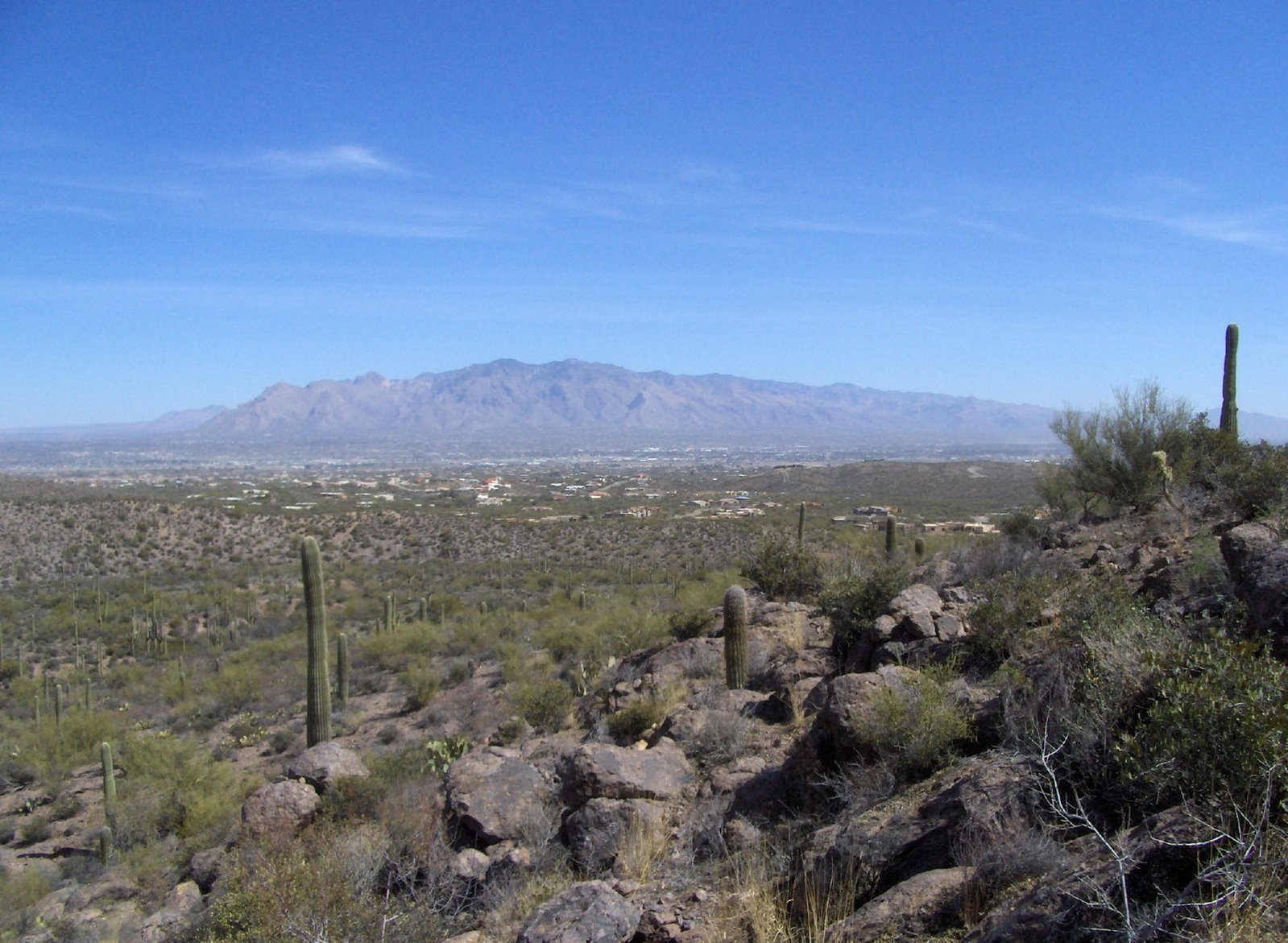
It seems to be the question flogging every one's mind these days- where is the Tucson real estate market headed? Let's face it, we are all affected by this down real estate market- whether we're looking to buy or sell a home in today's market or not. It affects consumer spending and consumer confidence, which in turn affects job creation and the overall economy. It's become an ongoing downward cycle, which is further perpetuated by sensationalized articles being churned out by our local media- whose goal is not to state the facts, but to sell newspapers. Yes folks, the real estate market (both nationally and locally) is a topic that's weighing heavily on most people's minds these days.
Consider this scenario, then consider the ramifications of it when you multiply it by the many homeowners here in Tucson (and nationally) who are faced with very similar predicaments. Joe (not his real name) bought his first house in the summer of 2005. It seemed to be a great time to buy. All his friends told him that owning a home was about the best investment decision a person could make. They also told him how easy it was to buy the home with no money down- he could even finance his closing costs. Why would he be so naive as to keep renting, when buying was a golden opportunity? His credit wasn't the greatest, but he could still qualify for 100% financing with a stated income, no doc, sub-prime loan. Even if something changed in the next few months, and he decided that the payment was more than he could handle- he could flip the home and make a lot of money. Everyone was doing it. It was so easy to buy and sell real estate.
So, as the story goes- Joe bought his first home. He paid $240,000 for it, which everyone said was a steal, considering that the house next door, which was the same floor plan just went under contract for $248,000. Joe's house was a 3BR/2BA, about 1,400 square feet in a popular neighborhood on Tucson's Northwest side. Prices were going up at the rate of about $5,000 a week with all the out of town buyers and investors from California. These real estate investors were coming by the bus load to buy 'investment properties' in Tucson- many of them utilizing 100% financing that was so ubiquitous. Joe saw himself as just plain lucky to get in on the action when he did.
Flash forward three years. Joe's 3/1 Adjustable Rate Mortgage (ARM) just kicked up to 10.5% a few months ago. In addition to his mortgage, Joe's expenses have gone way up, as inflation has caused prices to rise faster than wages. It's March of 2008 and Joe is in a bind. He can no longer afford his monthly mortgage payment. He talks to a real estate agent, only to discover that his house would fetch about $190,000 in the current market, and it could take six months to a year to sell it even at this price- given the huge inventory of homes on the market. This puts him in the hole $50,000 from what he owes on the house. Not to mention the closing costs and commissions involved in selling the home. How could this happen? How will he pay for this? What are his options? Who can he turn to? Joe is a very sad predicament, but a seemingly common one these days, as runaway interest rates and declining home prices are sending huge numbers of homeowners into a desperate downward spiral. These homeowners are upside down on their mortgages, many of them with no place to go- except foreclosure, and then personal bankruptcy. It's a horrible and sad spiral that is threatening to derail many homeowners, both here in Tucson and nationally.
Going from the microscopic to the macroscopic realm, nationally some estimates predict that mortgage losses may reach as high as $400 billion dollars over the next two years. It seems that about 40% of all people who did 100% financing between 2005-2007 are either in some stage of foreclosure or are behind on their mortgages. $400 billion may sound like a huge overestimate, but to put it in perspective, consider that there is a total of about $11 trillion in US mortgages that are outstanding. Our national and local economies are very threatened by this fact. The methods of this madness are detailed in a recent report stemming from the US Monetary Policy Forum's Conference on February 29, 2008. The title of this report by David Greenlaw et al. is, "Leveraged Losses: Lessons from the Mortgage Market Meltdown." The report basically arrives at the projected losses of $400 billion by using several different models. The first looks at the loan performance of certain sub-prime and other mortgage loans, adjusted for declines in home prices. A second model uses market prices to obtain a loss estimate based on current real estate values. While a third model looks to historical data in areas that have previously been hit hard by big real estate declines, i.e. California, Texas, and Massachusetts. The most noteworthy item about this report is that all three models arrived at almost the same prediction for losses- $400 billion.
There are many financial and economic implications here, but the biggest one, and the one that has the possibility to affect the market the most is that the rising tide of lender losses will further erode lender capital, and this will inevitably cause lenders to trigger further 'belt tightening' out of pure necessity. This means that it is going to become more difficult for buyers to get a mortgage, but also that lending institutions are going to be a lot tighter fisted with their lending practices then they ever were. Anticipation of this necessary belt tightening is one of the main reasons why last week FHA (a government backed loan product that requires only a 3% down payment) increased their conforming loan limits to $316,250. FHA is responding to the tightening and restrictiveness of mortgage lenders to try and prevent the economy from going into a tailspin. If lenders make it harder for borrowers to borrow money to get a mortgage, then the buyer pool is going to shrink. The Federal Reserve has been trying to step in with a remedy of appealing to banks to borrow money from the Fed to stimulate the economy. Many banks are not responding, and that's causing already stalling markets to stagnate.
How does this affect today's home buyer, and to answer the question posed in the title of this post, "Where do we go from here?" In a March 9, 2008 Wall Street Journal article geared to first time home buyers entitled, "A Good time to buy a house- if you can," it states that today's mortgage lenders want borrowers to have no more than 28% of their income towards paying their mortgage payment and are expecting down payments of at least 5%. Some experts predict that in many markets, a first-time buyer will require as much as a 10% down payment. These changing standards are pulling many would be buyers out of the mix, creating what the Federal Reserve terms an 'adverse feedback loop,' or intensification of the factors causing the decline of investments and consumer spending . The Fed is meeting again on March 18th, and is expected to lower the funds rate by as much as 50 basis points to hopefully curtail an adverse feedback loop. Mainly, today's buyer needs to know- how does this affect me? So here goes- my two cents...
A few things to keep in mind if you are in the market to buy a home in Tucson right now.
1) Home prices have come down, in some areas as much as 20% from their 2005 peak, making buying a home in Tucson a lot more affordable than it was two to three years ago.
2) Interest rates are still relatively low, helping to keep your payment more affordable.
3) There is a massive selection of homes to choose from (both new homes and resales). The supply of homes on the market has the possibility to help you to get a better price and terms on your new home.
4) If you're buying the home to live in (your primary residence), and don't plan on selling it for 3 to 5 years, home ownership may make a lot more sense to you then renting, as you can take advantage of the tax savings on writing off your mortgage interest. You are not throwing away money on rent, and it will be your home, to furnish and stylize as you see fit.
5) Most importantly, get a professional Realtor to help you sort through the home buying maze!
In my opinion, it is a great time to buy a home, if it makes sense financially to you, and you're not trying to see your home as an investment. Remember, your home is a roof over your head. It's a place to live. It's not a piggy bank, nor should it be the only egg in your nest egg basket.
Please don't hesitate to call me with any questions about this posting, or about the Tucson market in general.
Written by Sarah Ley
BSBA, ABR, CRS, CNHSA
Tucson Realtor with
Long Realty Company
(520) 404-0544
sley@longrealty.com
http://www.sarahley.longrealty.com/
Monday, March 10, 2008


Monday, February 25, 2008
Managing your real estate expectations
We've all heard the old saying that "Change is the only constant." It's so ingrained in our brains that we may not even know who said that line in the first place! I seem to recall that it was my old friend, Winston Churchill. Good old Winston! He was probably the biggest pragmatist who was also an optimist. It certainly helped that his intellectual capabilities gave him the wherewithal to topple the Axis powers, and prove himself as one of the greatest military leaders the world has ever known.
How can we apply Mr. Churchill's overwhelming sense of pragmatic optimism to the real estate picture we are faced with today? Well, first and foremost, I believe Mr. Churchill would say that you have to stake your own claim in the real estate jungle. Cease capitulating to the 'herd mentality.' If you are in the market to buy or sell a home, first and foremost- figure out where you are going, and then devise a plan on how to arrive at your destination.
A recent article in Time suggests that we should ignore the headlines. I subscribe to this idea. In fact, I think if we could ignore all the media hype circulating like flies on a warm July day, we'd all be one step ahead of the game. By now, I believe we all know the causes of how the nation got in this predicament. I don't feel the necessity to reiterate what caused the real estate debacle in the first place, because I don't want to bore you. Why continue to beat a dead horse? No, the name of the game from here on out has got to be, "Where do we go from here?" Figuring out what your situation is should be the first step in devising a plan that is right for you in the current real estate market. From understanding your situation, you can go to a plan of attack on ascertaining a solution.
Let's review several different scenarios for buyers and sellers in the market right now.
The first time home buyer. There isn't a better time for you then right now! If you've been a renter for as long as you can remember, this is the time to jump into the housing market with both feet. Interest rates are low. Inventories are high. You can call the shots right now. Sellers are ready to deal. Builders are ready to throw in a lot of incentives to get you to buy. The only caveat you need to concern yourself with is the type of loan you will obtain, and how much money you'll need as a down payment. Talk to two or three different lenders to get an idea of the loan programs they offer, and what you'll need to do to qualify for the loan. If you don't have a lot of money for a down payment, ask about FHA financing. It is making a comeback right now, and you may only have to come up with 2-3% for a down payment. This is a great time for you, Mr. first time buyer. Get a professional Realtor, and go stake your claim on owning a home! Check out this article from Smart Money for some good tips for first time buyers.
The move up buyer. The move up buyer is somewhat stymied right now, as many move up buyers have to sell their existing homes in order to buy a larger home. Due to the high inventory levels, it could take quite a bit longer to sell your home. Make sure that this is something you are committed to doing, that you are motivated, and that you understand the odds of selling. It could be a long process (as long as six months to a year). In order to keep your sanity, make sure your home is priced aggressively, and presented to its best advantage. What you stand to lose on one end, you can more than make up on the other end by getting a good deal on the house that you purchase. You will want to hire an agent with a proven track record for negotiating, as it is critical for you to sell your home for as much money possible, and to purchase your new home for the best possible price and terms. A professional Realtor will have many recommendations for lenders, title companies, insurance companies, home inspectors, repair technicians, and more. Ask your agent whom they recommend, as your Realtor is usually well connected to the best people in the industry. Using companies that offer 'one stop shopping' with in house lenders, title companies, etc. can not only save you money, but can also streamline the process for you, making it as hassle free as possible.
The crisis seller. You are behind on your mortgage payment. You are a home seller in crisis, and you are what is known as 'upside down' on your mortgage. You may have bought your home at the top of the market, and financed it with a subprime mortgage. Now it's worth considerably less than what you paid for it, and you owe more on the home than it is worth in today's market. You have no choice but to try and get out from under the mortgage that has become impossible for you to maintain. The first thing you need to do is to talk to your lender to figure out what your alternatives are, and how the lender can help you. The lender does not want to have to foreclose on you. Lenders lose a great deal of money in a foreclosure, so talk with your lender. It is possible that if you had an exotic loan product (negative amortization, adjustable rate, or interest only) your lender may either freeze your interest rate (usually at a rate that is higher than the going rate, but lower than your current rate) or assist you with refinancing options. It is possible that you may be able to refinance and stay in your home. If you refinance or get an interest rate freeze and can afford the payment, then you should consider staying in the home. If that is not an option and you must sell, then get a Realtor who understands short sales, as this is probably your only opportunity to avoid foreclosure.
The unmotivated seller. This is not a market for unmotivated sellers. If you are an unmotivated seller, then you have no business putting your home on the market. It's that simple. If you aren't motivated to sell, then stay put. If you put your home on the market at an inflated price, all you are going to do is create frustration for yourself, and enable your neighbor (who is priced with the market) to sell his home. Three years ago, a lot of unmotivated sellers were selling their homes. A seller's market will allow for unmotivated sellers. But there is no place for you in a buyer's market. So, save your time and aggravation, and if you don't need or want to sell your home, then don't waste your time putting it on the market.
The moving out of town seller. Usually you are a motivated seller, as more than likely you need the equity from your current home to buy your new home (see move up buyer above). If you have to move before your house sells, talk with your agent about staging the home. Vacant homes are more challenging to sell than owner occupied homes, as buyers are visual, and many times they need to see furniture placement to be able to picture themselves in the home. If your home is vacant and on the market, make sure that you have an agent who will be checking in on your home on a weekly basis. You'll also want to make sure that you have a landscaper and a cleaning person keeping the home in top condition, as it needs to be presented in its best possible light in order to stand out from competing properties. This article from Yahoo has some great tips for you to consider.
The investor. The investor buyer and seller has dried up a lot since the air came out of the market. If you are in the market to buy an investment property, there are several factors to consider. 1) Cash flow. Don't buy the property if it doesn't have a positive cash flow. Many 'investors' (who were really speculators in an investor's clothing) bought at the peak of the market, banking on appreciation only. Appreciation is a bonus! If you're going to invest in residential real estate, make sure you have the stomach for it. Some of the things you are going to have to deal with include vacancies, problem tenants, repairs, repairs, and more repairs! If you aren't up for this sort of investing, you may prefer to stick with the stock market. If you're selling your investment property, make sure that you are being realistic as far as pricing, property condition, and showing. This is a good time to buy an investment property if you find one that you like for your portfolio. Just remember that it needs to have a positive cash flow! This blog has some great info for would be first time investors.
All in all, considering that 'change is the only constant,' it isn't as grim in the real estate jungle as you may believe after reading the plethora of media naysayers. The main thing is to grin and bear it, and don't believe everything you read in the media. Keep your chin up, keep a positive attitude, and more than likely everything will fall into place, should you decide that a move is in the cards for you this year. Please call me if you have any questions about this article, or about the Tucson market in general.
Written by Sarah Ley
BSBA, ABR, CRS, CNHSA
Tucson Realtor with
Long Realty Company
(520) 404-0544
http://www.sarahley.longrealty.com/
sley@longrealty.com
Thursday, February 14, 2008
The Buyers have it!
It's that time of year- the busy season in residential real estate! The National Association of Realtors (NAR) states that 60% of all buyers move during March through June. This year in particular, buyers have a lot of incentives to take advantage of. High inventory levels, low interest rates, lower prices, builder incentives. It's plain to see that buyers are really in the driver's seat right now. There are currently about 9,300 resale properties on the market in the Tucson area, not to mention new construction choices. So if you are thinking of purchasing a home, there is no time like the present! The best thing you can do to help yourself have a positive and smooth real estate transaction is to hire a professional buyer's representative. There are many reasons to call a professional Realtor when considering your Tucson home purchase. One of the main reasons you need a buyer's agent is that you will have an expert set of eyes working on your behalf. Negotiation, coordination of properties that meet your search criteria, property showings, and assistance with selection of affilated companies (i.e. insurance, title, and mortgage). It is never more important to have representation than in a buyer's market. There are just too many choices of properties for sale for a buyer to be able to narrow down the search on their own. Additionally, your agent will help you negotiate the best price and terms for your new home, as well as recommend cost saving alternatives for repairs, insurance providers, and mortgage lenders. NAR recently published results of a satisfaction survey. The results were that the majority of home buyers and sellers who worked with a professional Realtor in their home purchase or sale were overall very satisified with the results.
Some of my home sellers were recently asking me, just who are the buyers right now? We currently have a lot of visitors in town for the gem & mineral show. Starting next week more visitors will arrive for the golf tournament at Dove Mountain. Many people who visit Tucson decide that they really like it here, and they want to purchase a home. Second home buyers account for about 20% of the Tucson marketplace, and our economy is quite dependent on our winter visitors. There are currently plenty of condos, townhomes, and homes in gated communities available for sale in all areas of Tucson. So if you are considering purchasing a second home in Tucson- sellers are ready to roll out the red carpet for you. There is a significant increase in traffic and pending contracts in the last week or so. Yet, some buyers think that trying to 'wait out the market' until asking prices go down is an effective strategy to follow, and they'll just low ball enough sellers until they find one that accepts their offer. The caveat with this strategy is that it is possible that you may lose your window of opportunity because someone else will not be waiting, and will buy that home that you have been eyeing. The lesson here is that if you are a serious buyer, once you find a home that you want (assuming that it is priced fairly for the market), then there is no time like the present to submit your offer, and a reasonable offer at that. Overall, the second home market remains strong due to retiring baby boomers flocking to Arizona. Because of our temperate climate, reasonable real estate prices, and accesibility to cultural events and amenities, Tucson is positioned to become one of the most desirable locations for migration of retiring baby bomers (purchasing both second homes and retirement homes) in the nation. Because of this factor, our market has the potential to remain strong despite declining economic indicators, and declining markets elsewhere. What this means is that your investment in Tucson real estate is probably a lot more safe than other previously speculative markets.
Back to the types of buyers in the market right now, there are also many buyers considering a 'move up' purchase because of lower interest rates. Rather than refinancing a smaller home and staying put, many homeowners are realizing that they can trade up to a larger home that has additional amenities they desire, and actually end up with a comparable mortgage payment because the interest rates have come down so much from a few months ago. The current 30 year fixed rate mortgage is running about 5.875%. If you're thinking of moving to a bigger home, and you want to take advantage of lower interest rates- it can be done, even in this buyer's market. Once again, it's very important that you have a professional Realtor on your team, as there are a lot of additional factors to consider when both selling your existing home and purchasing a new one. The majority of these homeowners have what is called 'frozen equity,' meaning that they need the equity from their existing home to purchase their new home. This can be tricky if you don't know what you're doing. All the more reason you need a professional Realtor to assist you with your sale and purchase. I would be happy to answer any questions you may have about second home purchases, move up purchases, and/or the Tucson real estate market in general. Please don't hesitate to contact me. Thank you & enjoy all of the great events going on about town!
Written by Sarah Ley,
BSBA, ABR, CRS, CNHSA
Tucson Realtor with
Long Realty Company
(520) 404-0544
sley@longrealty.com
http://www.sarahley.longrealty.com/
Friday, January 25, 2008
Tucson Real Estate- Open House on Sunday, January 27, 2008
Please stop in and visit me this Sunday. I will be hosting an open house at a great property that is priced to sell in the Catalina Foothills. If you click on the above link, it will take you directly to the listing information for this property. I've been a bit under the weather this week, but will be back in the next few days with a new blog article. Enjoy the beautiful Tucson weather & the beautiful lower interest rates! As always, don't hesitate to call me with any real estate questions or issues you may have regarding your Tucson home.
Written by Sarah Ley
BSBA, ABR, CRS, CNHSA
Tucson Realtor with
Long Realty Company
(520) 404-0544
sley@longrealty.com
http://www.sarahley.longrealty.com/
Thursday, January 17, 2008
Best Foot Forward to Sell Your Tucson Home
I am starting this week's blog with a quote from one of the most profound minds of all time, Winston Churchill. There are two quotes from Mr. Churchill that I would like to share with you. The first one is, "Attitude is a little thing that makes a big difference." The second one is, "Never, never, never give up." The reason I am starting with these quotes is two fold. First, I felt I needed inspiration to temporarily take my mind off the naysayers in the current real estate debacle. And secondly, it flows with my topic of this week's blog, making the best impression possible to sell your Tucson home in a crowded marketplace.
I was out with a buyer last weekend. We looked at a total of five homes. It was amazing the differences between homes that are putting their 'best foot forward,' and homes that are busy doing nothing but collecting dust in this over-crowded marketplace. The first house we looked at really had that 'wow factor' that is so crucial to successfully selling your home in today's competitive market. What was it about this house that made it stand out from the others? Driving up to the curb, the landscaping was nicely maintained. There was a pot with fresh flowers out in front of the house. A new Welcome mat welcomed my clients. Just the act of opening the front door, I could sense my client holding their breath to see the entry way. Right away I noticed that this house had a lot of natural light. It was clean. It was well presented. The owner was not home, and the smell of Saturday morning pancakes wafted towards us, beckoning us to the kitchen. "Wow," I told myself, "This is a homeowner who really gets it!" After all, it's not everyday that a Realtor will get excited about a house. But I did about this one. I found myself peeking around corners, and looking all around- like a kid on Christmas morning anxiously checking to see if Santa is still lurking! Even the backyard was perfectly manicured. Gracefully juxtaposed among perfectly presented hedges and shrubs were windchimes, potted plants, and "yard art." Suffice it to say, I was ready to get out my checkbook!
So, if "Attitude is a little thing that makes a big difference," as Mr. Churchill so simply stated, how did this homeowner pull off presenting their house in a very favorable light, and how can I help other homeowners do the same? I believe that if you go into something with a willful intent for success, you will get the outcome that you seek. There is a great book and film which I am sure you have heard of called, "The Secret." The basic premise is called the law of attraction, or simply stated, "Like attracts like." Yes, we know we are in a crowded real estate market with a surplus inventory. Yes, we know that the odds of selling a house right now are dramatically diminshed from two years ago. Yes, we know that buyers are being very picky and are passing over a lot of homes simply because they have the luxury of having a great many choices. But, let's remember one simple fact of home buying psychology. Buying a home (assuming the buyer is planning to live in the home) is largely an emotional decision. It is a decision that is not based entirely on logic, reason, or market statisticts, but is based on how the house makes the buyer feel. So, how can a home seller make his or her home the one that buyers get emotional about, thus wanting to buy? That is the purpose of this week's blog- to articulate to you some relatively easy ways to create enthusiasm for your home once you have made the decision to sell it.
First and foremost, the home must have an inviting exterior. Many buyers drive through neighborhoods to determine which homes they like before they even take a look at a home's interior. If your home doesn't pass the curb-appeal test, you may lose a great many prospective buyers before they ever have the chance to walk through your front door. Your landscaping needs to be well manicured. If you cannot do it yourself, hire someone. Dead trees and shrubs must be removed. Make the drive into the driveway inviting, and most importantly, try to see the exterior of your house from the eyes of a buyer. Driveways must be swept (or raked). Get a new welcome mat. Put potted flowers out front. Get rid of cobwebs. All windows must be cleaned. It is best to hire a professional to clean your windows, as they will also clean the screens. The front door should be freshly painted, and make it a neutral color. Maybe you like a red door, but what percentage of buyers will? The front of your house will provide the first impression prospective buyers will have of your home. If you can't see it with 'buyer eyes,' get an agent who can. Also, get an agent who will be honest with you, and not just tell you that everything looks nice to get your listing. (In case you haven't guessed, I do not believe in sugar coating to get a listing). The goal is to sell. If you want to achieve the goal, it is critcal that you pay attention to what is important to a buyer, and take the necessary steps to make sure your house stands out from everything else they have to choose from in their price range and desired location.
Next, consider what your prospective buyer will see upon first entering your home. Your home's interior makes an immediate statement about the home to the prospective buyer. Is it dark? If so, find a way to make it light and bright. Leave lights on for showings. Open the blinds. Clean the blinds! What about the floor coverings? If you have pets and/or children, are the carpets presentable? If they are not, either clean them- or change them out for new carpets. Your agent should have at his or her disposal, a preferred list of handymen and tradesmen who can help you get your home into tip top showing condition prior to putting it on the market. It cannot be overstated the impact of a clean home to a buyer. Clean says, "I care about this home." Dirty says, "It isn't important to me." The buyer who sees a dirty home will automatically believe that if the home is dirty, it has not been properly maintained. It is also imperative that you develop a system for showing your home. The best way to do this is to have a daily checklist that you go through before leaving your house for the day. Remember, your home doesn't have to look exactly like a model home, but the closer you get to a model home look, the better. Some items to include in your checklist include making sure the dishes are out of the sink. The beds must be made. The pets must be somewhere else for the showings. If you need help with this daily system, or devising the checklist- it ought to be one of the services your agent provides assistance with. The goal is to make your home the next one on the block that sells, not the one that sells six months from now. What I like to do with my seller clients is to get them excited about staging the home, and presenting it in its best possible light. To get them interested in presenting the home to its best advantage, I take my seller clients to see other homes that are for sale in the neighborhood so that they realize this is a competiton among other home sellers. They realize what it's like to be in the buyer's shoes, and then they are able to see their own homes in a different light. One of the best things to me about being a Realtor is that I enjoy helping people. I liken my role in guiding sellers to being their real estate 'coach.' It is very rewarding to me than when a seller thanks me for helping to sell their home in a short amount of time, for more money than they were originally expecting. If you do these things to prepare your home for the market, your chances of success are enormously improved. (I am assuming of course that you have priced your home competitively, as even the nicest looking homes are still a commodity to most buyers- and that means they have multiple choices, especially in a buyer's market).
Since home buying is largely psychological, consider the impact of smells. There is nothing worse (as a professional agent) than showing a house that looks great, but smells terrible. Buyers will question, "What is that smell?" They may even think there is something wrong with the house if the smell isn't right. As far as getting the right smell is concerned, don't overuse airfreshers. But do utilize the power of food! Bake bread or cookies. Pick up Pillsbury (or the store brand) of biscuits or cookies. Bake them every morning if you need to infuse a good smell in your home. If you don't want to eat biscuits every day, you can give them to your neighbors or send them to school with your child. What costs you $1.50 per day, could help you reap big benefits when you get a good offer from a buyer. If you are a smoker, you will need to disucss with your agent ways to try and get rid of the smell of cigarette smoke in your house (this has killed many a deal). Your agent can recommend strategies for helping to rid your home of the smell of smoke. Certainly, you will need to refrain from smoking in your home while it is on the market. Overall, when preparing your home to put on the market, try to think of it as presenting a product. The home should look good (reduce the clutter). It should smell good (home baked goods are the best). It should present itself as a package with no loose ends. You should also consider doing some maintenance, or even having a pre-inspection performed to alert you to any potential issues with the mechanicals of your home. If you do a pre-inspection, you will be able to repair any mechanical issues prior to having the buyer's inspector inspect the home. The high point for a buyer (in a real estate transaction) is when they get an accepted offer on the home they want to purchase. The low point is usually right after the home inspection. If you take care of these issues up front, you may avoid many possible pitfalls (which may include the buyer cancelling their contract after the home inspection).
Going back to the second Winston Churchill quote, "Never, never, never give up." This is why you want to hire a tenacious agent who will act as your coach throughout the entire process of selling your home. You want an agent who is going to make sure that you are keeping up with the showing system that you worked so hard to develop, because over time, you will find that your motivation to stay on top of your home's presentation will diminsh. Remember, it could be several months that you will have to continue to show your home and live in a 'model home.' As soon as you give up (and start leaving the dishes in the sink or the beds unmade), that is the day that an otherwise serious buyer may pass your house over because of a few simple things that you could have done to make a favorable impression. And you know the old adage, "You never get a second chance to make a first impression." Check out this website for staging infomation. It's one of the best I have yet to come across. I also have a link to it on my website. As always, please feel free to contact me with any questions, or if you are ready to sell your Tucson home!
Written by Sarah Ley
BSBA, ABR, CRS, CNHSA
Tucson Realtor with
Long Realty Company
(520) 404-0544
sley@longrealty.com
http://www.sarahley.longrealty.com/
Friday, January 11, 2008
Housing Market Stabilizing?
This very informative PDF slideshow is from NAR's chief ecomomist, Lawrence Yun, who participated in a forum panel discussion here in Tucson on January 9th with local industry experts, Laura Mance (regional VP of Coldwell Banker), Judy Lowe (Executive VP of Realty Executives), Rosey Koberlein (CEO of the Long Companies), and Kimberly Clifton (Owner of Tierra Antigua). The overall message was that the media is causing consumers to fear the worst regarding the housing market. This fear is creating anxiety and has caused many buyers to delay their home buying (they are trying to wait until the market bottoms out completely). The local experts on the panel seem to concur that we are in a somewhat stabilizing market environment here in Tucson, and can expect that we will be 'trawling along the bottom for a while' until the market possibly 'ticks up' in the second half of 2008.
My opinion is that we are probably going to see quite a few foreclosures throughout 2008. With prices already having been depleted from their 2005-2006 highs and many adjustable rate mortgages adjusting their interest rates upwards this year, my prediction is that you're going to have many homeowners who can 1) no longer afford the payments on their mortgages, and 2) as a result of having little to possibly negative equity- they will walk away from their homes. This may cause two things to happen: 1) due to huge losses and perceived risks in lending, banks will further tighten their underwriting standards, causing the mortgage market to become less liquid, and 2) further price declines are highly likely (some experts believe a 10-15% additional drop in prices is possible) as lenders are saddled with additional foreclosures, and in turn drastically lower prices in order to unload them as quickly as possible due to the glut of unsold homes. This hurts everyone in the communities where the foreclosures happen as property values are further depleted, and homeowners who plan to stay end up losing a lot of equity in their homes, and can certainly no longer use their homes as 'piggy banks.' Granted this sort of an outcome will not be across the board, but it will have a definite affect on consumer spending. There are areas of Tucson where homes will maintain their value, and some desirable areas of town may possibly see a small appreciation by the end of this year. But it will be relegated to pockets where inventory levels are tight, because the market is primarily fueled by supply and demand.
Since none of us has a crystal ball, we will all just be waiting to see how this plays out. I think you can take it and turn it any way you want to to get the outcome that is desirable to you. Sure, as a professional Realtor, I am hopeful that we have seen the worst of this market beast, and it will be smooth sailing from here on out for the rest of 2008. But the pragmatist in me says otherwise. There are too many homeowners out there struggling to pay their mortgages, and the inventory in Tucson is still running at 12 months (for resale homes). Builders are practically begging buyers to buy. I was at a new home community earlier this week with a client, and the builder's representative said to me, "This has been extremely difficult for us. We have never known a market like this in Tucson." One of my past clients likened it to the early 1990's when he said, "You couldn't give properties away." But the critical difference between the recession of the early 1990's, and the current down real estate market is that most homeowners had a larger equity stake in their homes at that time because banks were more conservative in lending money, and there weren't 100% financing options available if you were purchasing a home in 1991. It wasn't an option that banks would have even considered at that time (probably because they weren't yet packaging the loans to sell to investors). Another client of mine who works for a national bank that has a large home mortgage division said to me earlier this week, "As of this week, there is no more 95% finanancing. The minimum LTV (loan to value) ratios are now 89%." What this means is that the banks are getting more conservative. They are tightening their belts. They have to protect themselves if they are going to survive, and selling loans packaged to investors is no longer a viable option. The high flying, money slinging days of 2005 are over! The impact on the market of this decreasing liquidity is that 1) due to the subprime disaster, buyers cannot qualify for the high priced homes they once could, and 2) only buyers with a substantial down payment are going to be able to buy a home in today's market. This is pulling a lot of buyers out of the buyer pool, and it is another reason that could cause prices to drop further (remember what I said about supply and demand fueling the market), as well as causing inventory levels to continue to soar.
So there you have it in a nutshell- my two cents for the week! I will be back soon. My next article is going to be about home staging. I want to write about ways that you can make your house stand out from the competition in a crowded market place, and will do that in the next post. Well, have a great weekend, and please don't hesitate to contact me with any questions.
Written by Sarah Ley
BSBA, ABR, CRS, CNHSA
Tucson Realtor with
Long Realty Company
(520) 404-0544
http://www.sarahley.longrealty.com/
sley@longrealty.com
Thursday, January 3, 2008
New Year's News of the Tucson Real Estate Market
Bidding adieu to 2007 was not a hard thing to do for many people. Article after article labeled 2007 as one of the most brutal years in real estate history, both nationally and locally here in Tucson, Arizona. Sales of both new homes and resale homes were down. Some months in Tucson they were down 40%+ from 2006 levels. Inventories skyrocketed. Prices nose dived. Mortgage companies folded. It was not a good time to be swimming in the real estate sea- unless you were a shark! Sharks being few and far between, most folks were lucky to be able to tread water. Today, in January 2008, many homes in the Tucson area remain unsold, some after a year or more on the market. Nationally, vacant unsold homes (whether new builds or existing) are at 2.6%, the highest level they have ever been. This hurricane climate makes the common homeowner want to button down the holes, and hideout until the skies clear. Will 2008 bring smooth sailing in Tucson real estate, or will we continue to be futilely plugging holes in a sinking ship? That is anyone's guess, but one can ascertain some common denominators from looking at both the national and local picture here in Arizona.
First and foremost, real estate is a regional phenomena. Markets perform differently in different parts of the nation. Nationally, some areas did not experience the 'boom times' of 2004 and 2005, and are therefore currently considered healthy, balanced markets. It's the markets that ballooned the most during the boom times that will inevitably lose the most air. This is better know simply as gravity, or 'what goes up must eventually come down.' The local factors that influence real estate markets are mainly economic ones such as unemployment, job creation, consumer spending, etc. The result of what happens when a local real estate market takes a sharp blow is a trickle down affect, and has the ability to create a large chain reaction. The impact of a decline in the real estate market can be a great blow to a local economy. And right now, all of the facts point to the possibility that we haven't seen the worst of it yet. To illustrate an example of the trickle down affect, consider this scenario: a builder is sitting on a large number of unsold homes. The builder cannot obtain the capital necessary to finish those homes until buyers exist for them. Because the builder has his operations on hold until the homes sell, the subcontractors are out of a job. The real estate sales staff are idle. They too are losing money. This creates a withdrawal affect from the economy. If you consider the money multiplier principle, the individuals employed in this industry no longer have the spending power they once had. They can no longer afford as many meals out in restaurants, trips to the mall, vacations- you get the idea. The losses can be staggering, especially considering that consumer spending accounts for 70% of all economic activity. But this is why markets are local, and markets have a tendency to be indicators of the overall state of the economies they are a part of. Considering this, many local economists-including Marshall Vest, have stated that we are already in the midst of a recession that has the probability of lasting through the end of 2008. If you believe that, then it would be logical to assume that we haven't seen the 'worst of times' in Tucson real estate just yet.
If that weren't enough of a pill to swallow on this mild January night, here's another iron to put in the fire! Adjustable rate mortages and 100% financing options, be they subprime or their less risky cousin Alt-A mortgages, gained popularity (starting in 2002-2003) so that consumers could leverage their real estate purchases and investors could buy packaged loans and (in theory) 'spread their risk.' This was aptly named securitization. In early 2008, we are now at a juncture when the first of these 5 year adjustable rate loans will be kicking up their interest rates. Couple that with the fact that nationally 40 percent of all mortgages made in 2006 fall into the subprime or Alt-A category, and the potential for disaster becomes a dark shadow looming like a wolf over a field of sheep. In theory, if a homeowner borrowed 100% of the purchase price of a home in 2003, he may be okay- since it is safe to say that home values overall have gone up significantly since then. But if a homeowner borrowed 100% of a home's value in 2005, he may be in over his head, and 'upside down' in his mortgage, as the property is now worth less than what it was worth when he bought it. You don't have to be a mathmatical genius to do the numbers. What this means in simple terms is that it is highly likely that banks are going to be foreclosing on a greater number of homes in 2008, and perhaps we have only seen the tip of the iceberg thus far. Luckily the government seems to recognize this as a plausible outcome, and is stepping in to help homeowners in trouble refinance their mortgages into more sensible and hopefully affordable options. But the fact of the matter remains that many of these houses are not worth what they were even six months ago. And that is a troubling factor that is bankrupting many homeowners, and also contributing to the number of unsold homes, whether bank-owned, builder-owned, or individually owned.
With the glut of unsold homes on the market, it's no wonder buyers are trying to wait out the market until they believe it has bottomed out. But if you compare the real estate market to the stock market, people buy stocks in bull markets, and they buy in bear markets. It's a far better bet to buy in a bear market. The chances of making a profit are a lot better. My opinion is that there are a lot of deals out there in the Tucson market right now. The houses that are selling are the ones that are presented in the best possible way (clean and shiny, freshly painted, all repairs done!) and priced fairly. It's true, buyers want a deal. Can you blame them? When we are daily brow beaten by article after article of blows delivered to our local and national markets, its no wonder buyers are running scared and waiting for the absolute perfect time to buy. Hint- there is no time like the present!
One other thought for this article, and for the new year has to do with real estate professionals. The current real estate market has acted like a sheath, weeding out real estate agents who were either not full time or career agents. It would stand to reason that the professionals remain. Those die hard agents who are going to stick it out through thick or thin for their clients. One thing is for certain, those are the agents you want on your side, representing you in a real estate transaction. I'm happy to count myself among that camp, so if you desire professional real estate advice- I'm only a phone call or e-mail away. I'm almost afraid to say it now, but it's such a tradition- I have to... Happy New Year~May 2008 bring you closer to your real estate dreams coming true!
Written by Sarah Ley
BSBA, ABR, CRS, CNHSA
Tucson Realtor with
Long Realty Company
(520) 404-0544
http://www.sarahley.longrealty.com/
sley@longrealty.com
Subscribe to:
Posts (Atom)